2026 Top Barrel Hand Truck Types for Global Buyers

Choosing the right barrel hand truck starts with the load, the route, and the way workers handle each drum. A compact two-wheel model may suit short moves across a level warehouse floor. Stair-climbing designs help with steps, while drum cradles and retaining straps can steady loads during transport. For frequent transfers, powered options may reduce pushing effort, but they also need charging space and routine checks. Small details matter. A narrow doorway, a rough ramp, or a slick patch near a wash station can change which frame and wheels work best.

For this overview, Alex Morgan is an illustrative, fictional material-handling specialist, not a cited real-world source. His guiding line is: “Match the truck to the route, not just to the drum.” That is a useful buying test, though it cannot replace checking the manufacturer’s load rating and operating instructions. Buyers comparing 2026 models should review drum compatibility, rated capacity, wheel material, handle comfort, and storage needs. They should also consider whether the truck will move steel, plastic, or fiber drums, since shape and contact points can affect stability. A model that looks sturdy in a catalog may feel awkward in a tight aisle. No single type fits every site. This guide examines the main barrel hand truck types and the trade-offs global buyers can assess before requesting a quote. One detail is easy to miss: real floor conditions rarely match showroom floors.
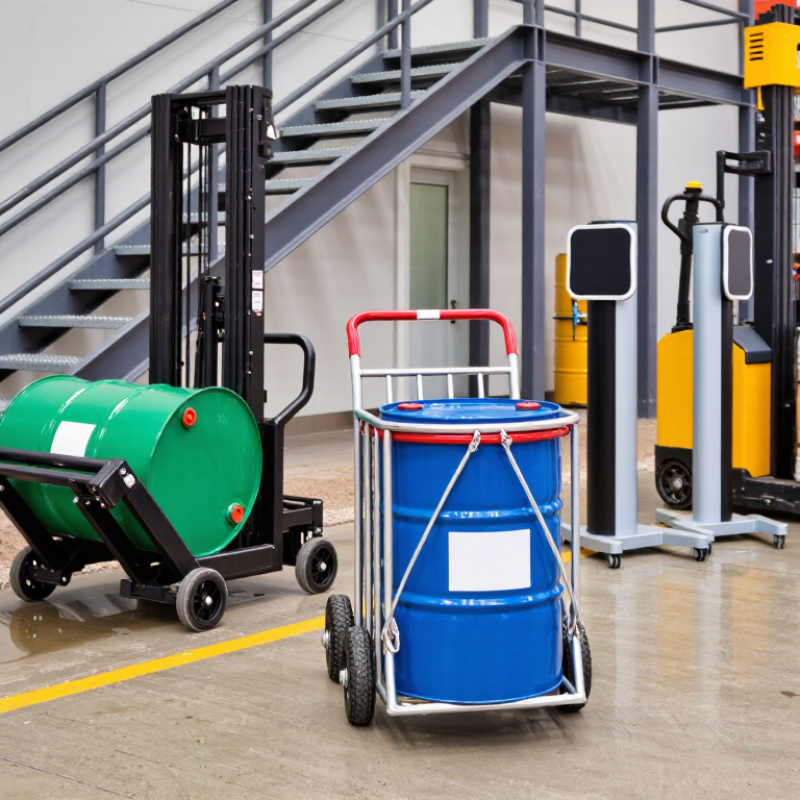
2026 Top Barrel Hand Truck Types for Global Buyers

What a Barrel Hand Truck Is and How It Works

A barrel hand truck is a wheeled frame built to move upright drums with controlled leverage. Its curved cradle supports the drum wall, while a toe plate or lower hooks help locate the base. Some models use a strap or chain to keep the load from shifting. The wheels carry most of the weight once the operator tilts the frame backward. Simple, but not effortless.

To use one, bring the toe plate against the drum’s bottom edge, secure the restraint, and tilt the frame slowly. Keep the drum close to the frame as it rolls over the wheels. A tight aisle, floor seam, or raised threshold can change the balance suddenly. In practice, floors are rarely perfect. Check the truck’s rated capacity and drum dimensions, then inspect wheels, fasteners, and restraints before moving a load.

The U.S. Bureau of Labor Statistics reported 2.6 million nonfatal workplace injury and illness cases in private industry for 2023, or 2.4 cases per 100 full-time workers. This figure covers many causes, not barrel handling alone, but it underscores why controlled material movement matters. A barrel hand truck can reduce carrying and awkward lifting, yet it cannot correct poor load balance or a damaged wheel. Small details count.

Core Components and Features of Barrel Hand Trucks

A barrel hand truck relies on a sturdy frame, curved support, retaining strap, and wheels. The frame carries the load, while the curved cradle helps keep a round drum from shifting. A strap adds restraint during movement, but it should fit snugly without crushing the barrel. Small contact points matter. Check welds, fasteners, and frame edges for damage before use.

Wheel choice affects control on different surfaces. Solid wheels resist punctures on smooth floors, while larger pneumatic wheels can roll more easily over uneven ground. That comfort has a trade-off: air-filled tires need pressure checks.

Handles should provide a secure grip and enough clearance for gloved hands. Some models include a foot plate or nose plate to help position the barrel. Dimensions and rated capacity should match the barrel’s size and filled weight, not just its appearance. A mismatch is easy to underestimate.

Tips: Test the truck with a secured load on level ground before regular use. Keep the barrel centered, move at a controlled pace, and avoid sudden turns. Inspect the strap and wheels regularly. Even a well-built truck can feel unstable on a slope, so route planning still matters.

Main Barrel Hand Truck Types Available to Global Buyers

Global buyers can choose from several barrel hand truck types, each suited to different handling conditions. A standard two-wheel drum truck supports an upright barrel with a curved frame and a lower toe plate. Operators tilt the load slightly, then guide it across firm floors. This design is simple. It works best when the route is level and turning space is available. Some models add a retaining chain or strap to help secure the barrel during movement.

Three-wheel stair-climbing trucks use rotating wheel clusters to negotiate steps and uneven thresholds. They can reduce the need to lift a barrel over each step, but the operator still needs control and a clear route. Cradle-style trucks support a drum across a wider frame, which may help when moving it over rougher surfaces. Powered drum trucks can assist with lifting or transport in facilities handling frequent loads. Their controls, battery needs, and service requirements deserve careful review.

The right choice depends on barrel dimensions, filled weight, floor condition, and how often the truck will be used. Check the rated capacity rather than judging by frame size alone. Measure doorways and turning areas; a truck that fits the drum may still be awkward in a narrow aisle. Wheel material also matters: hard wheels roll easily on smooth concrete but may feel harsh on damaged floors. Specifications can look reassuring on paper. A short, supervised trial with a representative load often reveals practical limits.

2026 Top Barrel Hand Truck Types for Global Buyers - Main Barrel Hand Truck Types Available to Global Buyers

Type Typical Design Suitable Drum Formats Common Applications Key Selection Considerations
Standard two-wheel drum truck Upright frame with a toe plate, two wheels, and a drum-retaining chain or strap. Common steel or plastic drums, when the frame and restraint fit the drum dimensions. Moving upright drums across relatively level floors in warehouses, workshops, and loading areas. Check the rated capacity, drum diameter range, restraint arrangement, wheel type, and handle height.
Drum truck with drum-gripping mechanism Two-wheel hand truck fitted with a clamp or gripping attachment to secure and support a drum. Drums compatible with the grip’s specified rim, diameter, and construction. Handling drums where a chain or strap alone does not provide the required positioning or retention. Confirm that the grip is designed for the specific drum rim and material; follow the manufacturer’s operating instructions.
Stair-climbing drum truck Specialized frame with stair-climbing wheels or a powered climbing mechanism and a drum restraint. Drums within the model’s stated dimensions and load rating. Moving drums on stairways or stepped routes where a conventional two-wheel truck is unsuitable. Verify stair geometry, load rating, braking or control features, operator training requirements, and route conditions.
Drum dolly Low-profile platform or ring base, usually with multiple swivel casters; not a conventional upright hand truck. Drums that sit securely within the dolly’s support area and fit its size limits. Short-distance movement and repositioning on smooth, level floors. Check caster material, floor condition, platform diameter, stability, and rated capacity; secure the drum when needed.
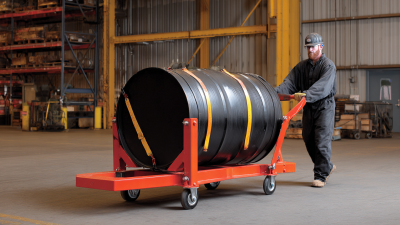
Horizontal drum cradle truck Cradle-style support that holds a drum on its side, often with a frame and wheels for controlled movement. Drums intended for horizontal handling and compatible with the cradle profile. Transporting or positioning drums horizontally where the process or storage setup calls for that orientation. Confirm the drum is approved for horizontal handling and that the cradle prevents rolling or shifting.
Powered drum truck or drum handler Battery-powered or mechanically assisted equipment that may lift, transport, or position drums. Drums within the equipment’s specified size, weight, and attachment limits. Frequent handling, longer travel distances, or tasks requiring reduced manual lifting effort. Review rated capacity, battery and charging requirements, controls, braking, service access, and operator training.
Stainless-steel drum truck Manual drum-truck configuration built with stainless-steel components for corrosion-resistant service. Drums compatible with the truck’s frame, toe plate, and restraint system. Washdown areas or environments where corrosion resistance and cleanability are important. Check the stainless-steel grade, weld finish, wheel material, cleaning requirements, and load rating.

Buying note: Load ratings, drum-size compatibility, wheel options, and operating limits vary by model. Confirm the equipment nameplate and manufacturer specifications before use, and move drums only on routes and surfaces suited to the truck.

How to Match a Hand Truck Type to Your Load and Workplace

Choosing a barrel hand truck starts with the load, not the catalog picture. Check the filled drum’s weight, diameter, and center of gravity. A two-wheel model with a curved cradle and retaining strap suits frequent, controlled moves across short, level routes. The strap should sit firmly without crushing the drum. For moving drums between nearby workstations, a four-wheel dolly can keep the load upright and reduce repeated tilting. It needs clear floor space, though. A powered or lift-assist model may help with heavier loads, but only if its rated capacity and handling method fit the task.

Now look closely at the workplace. Measure doorways, turning areas, ramps, and storage gaps before selecting a frame. Small hard wheels can roll smoothly on clean concrete, but may struggle over joints or rough thresholds. Larger, softer wheels often handle uneven floors better, though they may need more turning room. Check the truck’s stated capacity, and allow for the full drum weight—not just its empty shell. Test the chosen type on the actual route with a secured load. One detail is easy to miss: a truck that works well in the warehouse may feel awkward near a narrow loading bay. That first choice may need revisiting.

Key Safety, Capacity, and Compatibility Factors to Compare

2026 Top Barrel Hand Truck Types for Global Buyers

Barrel hand trucks include two-wheel models with a curved support, clamp-style carriers, and cradle designs for controlled tilting. The right type depends on the drum’s material, rim shape, and filling level. A steel drum with a firm top rim may suit a clamp model; a plastic drum may need broader support to avoid concentrated pressure. Check the label. Rated capacity should exceed the drum’s loaded weight, not just its empty weight. Allow room for handling uncertainty.

Safety depends on more than capacity. Look for secure retention, stable wheel placement, and handles that let the operator maintain control during turns. Brakes can help on slopes, though they do not replace careful route planning. Small details matter. Narrow doorways, uneven floors, and vehicle ramps can change which truck is practical. Wheel material and diameter affect grip and rolling effort, especially over thresholds.

Compatibility deserves a physical check before ordering. Compare the truck’s grip range and support height with the drum’s dimensions, including any rim or bung that changes its profile. Confirm the listed capacity applies to the intended load position. Specifications may not capture every real-world condition. A measuring tape and a test fit can reveal problems that product descriptions miss, and that step is easy to overlook.