What Is the Best Drum Handling Equipment from China?

Choosing the best drum handling equipment from China requires more than comparing prices or polished product photos. It demands practical evaluation of safety, construction quality, load capacity, and supplier reliability. A suitable machine should move steel, plastic, or fiber drums without slipping, denting, or exposing workers to unnecessary strain. In real warehouse conditions, narrow aisles, uneven floors, and frequent loading cycles reveal weaknesses quickly. Small details matter.

Reliable Chinese manufacturers offer drum lifters, drum stackers, drum rotators, clamps, tippers, and powered transporters for different working environments. A manual drum truck may suit occasional movement, while an electric model can improve productivity in busy facilities. Buyers should check rated capacity, drum diameter range, lifting height, battery performance, wheel materials, braking systems, and emergency controls. Clear drawings and test records are more valuable than impressive marketing language. Ask for videos of actual operation.

Safety comes first.

Quality should be verified through factory audits, sample testing, and documented inspection procedures. Relevant certifications may include CE requirements for applicable markets, while design reviews can reference ISO 12100 principles. However, certificates alone do not prove dependable performance. Welding quality, hydraulic sealing, paint durability, and spare-parts support deserve closer attention. No supplier is perfect. Even a strong model may need better instructions or smoother controls after installation. This is why honest communication, warranty terms, operator training, and after-sales response should influence the final decision. The best drum handling equipment from China is not simply the cheapest option. It is the solution that performs safely, consistently, and transparently in your actual workplace.
What Is the Best Drum Handling Equipment from China?

Types of Drum Handling Equipment Made in China

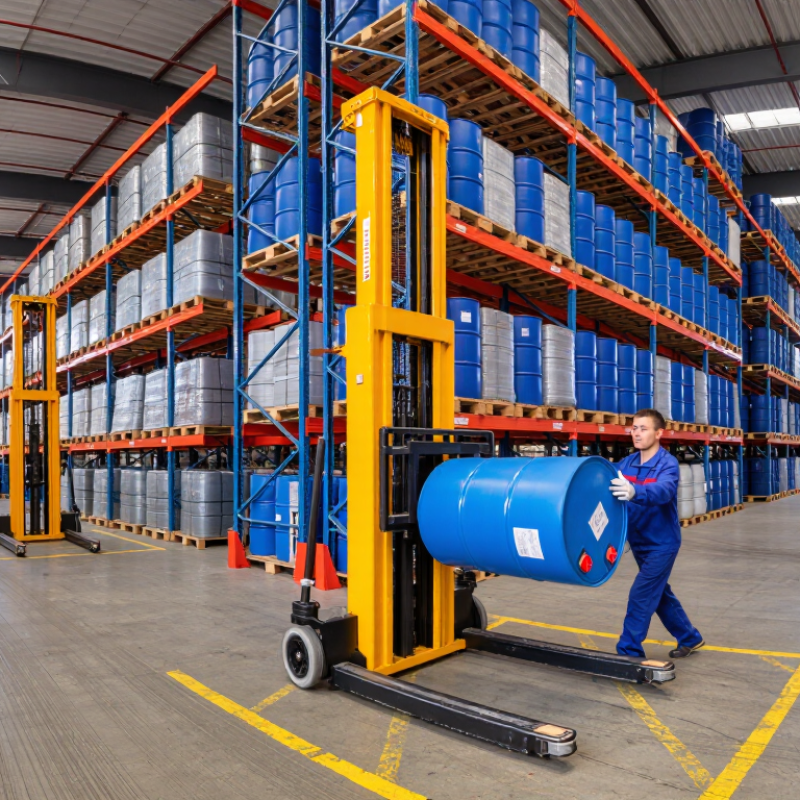
Drum handling equipment made in China ranges from simple drum trucks to powered lifting systems. A two-wheel drum trolley suits short, level routes, while a clamp-style lifter can raise a steel drum onto a pallet. For frequent transfers, a hydraulic or electric drum stacker reduces repeated manual lifting. Rotating models can tip or turn a drum; confirm that the grip and rotation mechanism match its rim, material, and filled weight.

Small details matter. Check drum diameter, safe working load, lift height, aisle width, and floor condition before choosing equipment. BLS reported 2.6 million nonfatal workplace injuries and illnesses in private industry in 2023, with a total recordable case rate of 2.4 per 100 full-time workers (U.S. Bureau of Labor Statistics, 2023). These figures cover all private-industry work, not drum handling alone, but they underline why task-specific risk controls matter. A capacity label is not a substitute for checking load stability.

Chinese manufacturers offer manual, hydraulic, and battery-powered options, often with different forks, clamps, and drum cradles. Ask for a rated-load test, operating instructions, spare-parts details, and inspection guidance; compare these against the actual work cycle. I would not select a unit from price or lifting height alone. A model may fit the drum yet feel awkward in a tight aisle, so an on-site trial can reveal issues a specification sheet misses.

What Is the Best Drum Handling Equipment from China?

Common Drum Sizes and Equipment Types

Common nominal drum sizes include 15, 30, and 55 US gallons, equivalent to approximately 56.8, 113.6, and 208.2 liters. Drum trucks move drums, hydraulic stackers lift and position them, forklift attachments handle them with a forklift, and drum rotators or electric handlers support controlled positioning. Check the equipment’s rated capacity and compatibility with the specific drum before use.

Key Features of Reliable Chinese Drum Handling Tools

Reliable Chinese drum handling tools should feel controlled, not merely sturdy. Look for a clearly marked load capacity, smooth lifting action, and a clamp or cradle that fits the drum’s shape. Welds should be even, with no visible cracks or sharp burrs. During a floor check, wheels should roll without wobbling, even over small joints in concrete. Small details matter.

A useful design also protects the operator’s hands and back. Handles should offer a firm grip, and controls should remain easy to reach while guiding a loaded drum. For wet or dusty work areas, inspect the finish and moving parts for corrosion resistance and easy cleaning. Ask for operating instructions, maintenance guidance, and replacement-part availability. A low purchase price is less useful if a worn wheel stops the cart. No design is perfect; tight aisles can still make turning awkward, so test the equipment in your actual workspace when possible.

Tips: Confirm the drum dimensions and weight before ordering. Check the brakes, fasteners, and lifting mechanism before each shift. If the load slips or the tool feels unstable, stop and reassess the setup.

What Is the Best Drum Handling Equipment from China? - Key Features of Reliable Chinese Drum Handling Tools

Equipment Type Typical Use Drum Compatibility Useful Features to Check Selection Considerations
Drum trolley or hand truck Moving drums short distances across a floor; some designs can help load a drum onto a vehicle or platform. Compatibility depends on the cradle, retaining strap, and drum dimensions. Check suitability for steel, plastic, or fiber drums separately. Secure drum restraint, stable wheels, a suitable handle, and a frame designed for the stated load. Check the rated capacity, wheel type, turning space, floor condition, and whether the drum must remain upright.
Drum lifter or lifting attachment Raising and transporting a drum with compatible lifting equipment, such as a forklift or hoist. Grip style and contact points must match the drum rim or body. Not every attachment suits every drum material or closure type. Positive engagement, clear operating instructions, suitable safety provisions, and an identifiable rated capacity. Confirm the lifting method, drum design, load rating, and compatibility with the carrier before use. Follow the manufacturer’s instructions.
Drum stacker Lifting and positioning drums at different heights, including stacking where the equipment and drum packaging allow it. May use a clamp, cradle, or other drum-specific attachment; verify the permitted drum dimensions and construction. Stable base, controlled lifting and lowering, secure drum retention, and clearly stated capacity at the relevant lift height. Consider aisle width, required lift height, floor condition, drum mass, and the stability of the proposed stacking arrangement.
Drum rotator or tilt handler Tilting or rotating a drum to position it or dispense its contents. Must securely retain the drum during rotation. Check that the clamp or cradle is approved for the drum’s shape and material. Controlled rotation, reliable retention, clear operating limits, and protection against unintended movement. Assess the drum’s contents, required pour angle, dispensing process, and any workplace controls needed to prevent spills.
Forklift drum attachment Moving one or more drums using a forklift, where the attachment is compatible with the truck and task. Attachment designs vary; confirm drum size, material, rim profile, and the number of drums it is designed to carry. Secure fork mounting, drum retention, legible capacity information, and documentation for the attachment. Check the forklift’s capacity with the attachment fitted, load center, attachment weight, and the forklift manufacturer’s guidance.
Manual drum pump or dispensing accessory Transferring liquid from a drum; it does not replace equipment needed to lift or transport the drum. Wetted materials and bung or opening size must be compatible with the drum and the liquid being handled. Compatible seals and materials, a suitable connection, and clear limits for the intended liquid and operating conditions. Check chemical compatibility, viscosity, required flow method, and applicable workplace procedures before selecting a pump.

Buying note: There is no single best drum-handling tool for every job. Compare the task, drum construction, rated capacity, lifting interface, operating environment, and available instructions. Capacity and compatibility vary by model; confirm them from the equipment documentation and rating label before use.

How to Choose the Right Drum Handling Equipment

What Is the Best Drum Handling Equipment from China?

How to Choose the Right Drum Handling Equipment

The right equipment depends on the drum, the load, and the route it must travel. A drum truck may suit short trips across a smooth workshop floor. For regular lifting, stacking, or pouring, consider a lifter or rotator designed for that task. Check the drum’s material, diameter, and fully loaded weight against the equipment’s rated capacity. Don’t guess from appearance.

Think about the working space, too. Measure doorways, aisle width, and the height needed to reach shelves or platforms. A large machine may have ample capacity but prove awkward around tight corners. Check the handle position, braking method, and controls for the operators who will use it. Ask the supplier for clear specifications, maintenance guidance, and details of available service support. Price can sway the decision; I would pause before treating the lowest quote as the best fit.

Tips: Measure your largest drum and narrowest aisle before requesting a quote. Check the equipment’s wheels and frame for damage, and confirm the load rating in the supplied documentation. If a specification is unclear, ask for clarification. It’s an easy detail to miss.

Safety Standards for Chinese Drum Handling Equipment

Safety Standards for Chinese Drum Handling Equipment

When sourcing drum handling equipment from China, treat safety documentation as part of the product, not an afterthought. Check the rated load, drum dimensions, and intended use against your actual containers. Ask for clear operating instructions, inspection guidance, and test records for the specific model. A certificate alone proves little. Confirm which standards it covers and whether they match the rules in your destination market.

For powered lifters and stackers, inspect brakes, emergency stops, guards, and controls during a practical demonstration. For manual trucks, check wheel condition, handle clearance, and how securely the drum is held while turning. Operators need training on safe lifting, travel routes, and uneven floors. Small details matter. A worn strap or slippery drum rim can change how securely a load is carried. The rated capacity should remain visible and easy to understand.

Before purchase, request photos or video showing the equipment handling a comparable drum, then review the maintenance schedule and spare-parts availability. Keep records of incoming inspections and remove damaged equipment from service. I would still question any supplier who offers polished paperwork but avoids a live demonstration. Documents cannot show every awkward corner or floor transition in your warehouse, so test the equipment in realistic conditions where possible.

Applications and Maintenance of Drum Handling Solutions

Drum handling solutions serve warehouses, workshops, and production lines where steel or plastic drums must be moved, lifted, or tilted. Drum dollies suit short, level routes; lift-and-tilt equipment helps position containers beside filling stations. In tight aisles, compact equipment can reduce awkward manual repositioning. Match the device to drum size, load rating, floor condition, and pouring height. A mismatched clamp can slip. That detail matters.

Maintenance protects both operators and product flow. Inspect wheels for flat spots, check straps and clamps for wear, and test brakes before each shift. Keep hydraulic units free of leaks, and remove residue that could make handles slippery. The U.S. Bureau of Labor Statistics reported 2.6 million nonfatal workplace injuries and illnesses in private industry in 2023, with an incidence rate of 2.4 cases per 100 full-time workers. This broad figure is not specific to drum handling, but it reinforces the value of routine hazard checks. A checklist helps, though it cannot replace watching equipment under real working conditions.

Tips: Verify the drum’s weight before lifting. Move slowly over floor joints, and keep the load low while traveling. Record defects and take damaged equipment out of service until assessed. Recheck clamps after repairs; a quick visual check may miss loosened fasteners.