China Best Barrel Dumper Manufacturers and Suppliers

Selecting a barrel dumper manufacturer in China involves more than comparing prices. Buyers need equipment that fits their drums, materials, workflow, and available floor space. A reliable barrel dumper should lift and discharge containers in a controlled way, with guarding and operating features suited to the intended task. Small details matter. Drum diameter, loaded weight, pouring height, and rotation method can affect both fit and daily usability.

This guide introduces key points to consider when comparing China-based barrel dumper manufacturers and suppliers. Product specifications, drawings, material options, and customization limits can help clarify whether a model suits a particular production line. Ask how the equipment is tested, what documentation is supplied, and which spare parts are available. These questions are practical, not overly cautious. A polished catalog cannot show every installation challenge.

Supplier evaluation also benefits from checking communication quality and after-sales support. Request clear answers about lead times, commissioning, maintenance, and operator training. If possible, review a demonstration or speak with users handling similar drums. One awkward gap in a specification can matter more than a long feature list. Price still matters, of course, but the lowest quote may not represent the best long-term fit. Specifications should be confirmed before ordering, since requirements differ across sites. This overview offers a starting point, not a substitute for a careful equipment assessment.
China Best Barrel Dumper Manufacturers and Suppliers

What Is a Barrel Dumper and How Does It Work?

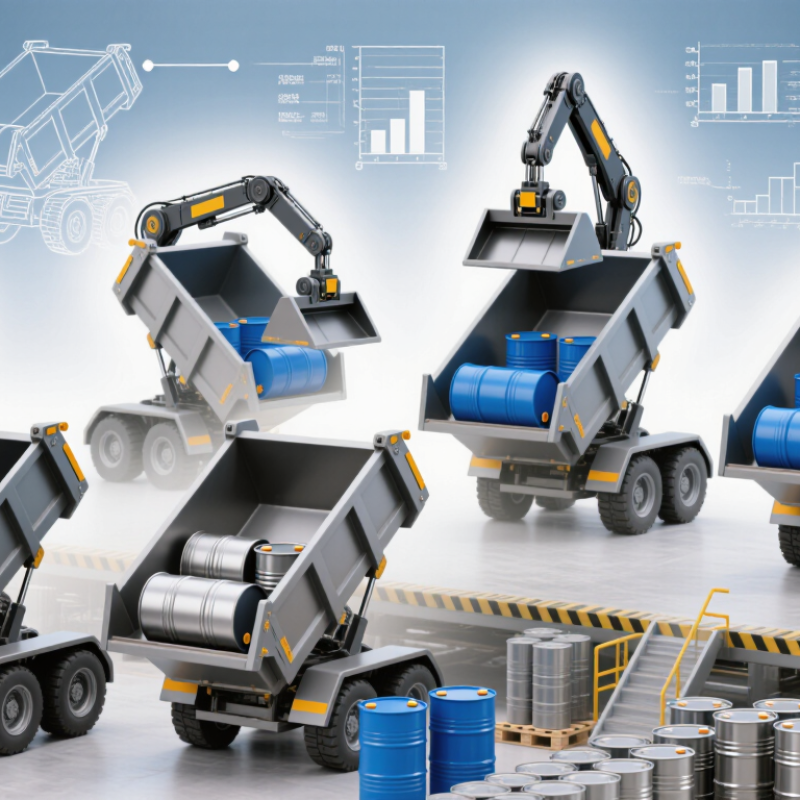
A barrel dumper lifts and tilts a drum so its contents can be transferred with less manual handling. A typical unit has a frame, a drum cradle, a restraint, and a powered or hand-operated tilting mechanism. The operator positions the drum in the cradle and secures it before raising or rotating it. Depending on the model, the drum may be tipped forward, turned sideways, or lifted to a set height. The movement should be controlled, not abrupt. At the discharge point, the operator pours into a hopper or container, then returns the drum to its upright position. That is the basic cycle.

Before choosing equipment, check the drum’s dimensions, filled weight, and center of gravity against the dumper’s rated capacity. Confirm the discharge height and available floor space, too. Small differences matter. A drum that fits poorly may shift during tilting, even when its weight is within the rating. In daily use, inspect restraints, controls, and moving parts for wear, and keep the operating area clear. Hands should stay away from pinch points. A dumper can reduce strain, but it does not remove every handling risk. Matching the machine to the actual drum and workflow takes careful attention.

Main Types and Industrial Uses of Barrel Dumpers

Barrel dumpers are built in several configurations, each suited to a different load and workflow. Manual models use a hand crank or lever to lift and tilt a drum. They can suit occasional transfers where loads are modest and floor space is limited. Hydraulic dumpers reduce operator effort and offer controlled rotation for heavier drums. Electric models can support frequent production-line use, especially when repeatable lift height and tipping angle matter. Forklift-mounted units move drums between storage areas and process stations without a fixed installation.

Not every plant needs one. The right choice depends on drum size, material, weight, and discharge point. In food processing, a dumper may feed ingredients into a mixer while limiting awkward manual handling. In paint and coatings operations, it can position a drum over a blending vessel for measured pouring. Warehouses use mobile units to transfer drums onto pallets or dispensing stands. Check the rim grip, rotation range, and floor clearance before purchase. A mismatch may cause spills or slow the task. It is easy to overlook cleaning access, too. Dust, residue, and uneven floors can change how reliably a dumper performs. Teams should verify capacity and operating procedures with the equipment supplier before putting a unit into daily service.

Key Features of China’s Barrel Dumper Market

China Best Barrel Dumper Manufacturers and Suppliers
Key Features of China’s Barrel Dumper Market

China’s barrel dumper market serves warehouses, factories, and processing sites with varied handling needs. Buyers can compare manual, electric, and hydraulic models, then match lifting capacity and discharge height to their drums. Common details include adjustable clamps, guarded controls, and wheels suited to smooth floors. Some suppliers offer custom frame dimensions, but a drawing should confirm clearances around racks and doorways. A machine that fits on paper may still be awkward beside a busy production line.

Build quality deserves close inspection. Ask how the frame, welds, braking system, and drum restraints are checked before shipment. Request operating videos with a loaded drum, not only an empty demonstration. Confirm compatible drum diameters, control voltage, spare-part availability, and service response times in writing. These checks matter. A polished specification sheet can omit practical limits, and a lower purchase price may not include useful support.

Tips: Measure the drum and travel path before requesting quotes. Compare rated capacity with your real load, including liquid weight. Ask for test records, and verify that the dumper remains stable during lifting and tilting. One detail is easy to miss: floor slope can affect positioning.

Leading Barrel Dumper Manufacturers and Suppliers in China

Leading barrel dumper manufacturers and suppliers in China serve food, chemical, pharmaceutical, and general manufacturing facilities. Their equipment can lift, rotate, and empty drums into mixers, hoppers, or production lines. MHI’s 2024 Annual Industry Report found that 55% of surveyed supply-chain leaders planned to increase technology investment. This broader trend supports interest in safer, more controlled material handling, though it does not measure barrel dumper sales directly.

When comparing suppliers, check rated load, compatible drum sizes, lift height, discharge angle, and cycle frequency. Ask for drawings, material specifications, safety features, and test records for the proposed configuration. A supplier’s ability to adapt controls or discharge height can matter more than a low quoted price. A neat catalogue is not proof of performance; request a demonstration using a representative drum and material. Small oversights happen.

Tips: Confirm whether the quoted capacity includes the drum and its contents. Ask how the dumper behaves during power loss, and clarify installation, operator training, spare parts, and warranty coverage before ordering.

Common Drum Capacities for Drum-Handling Applications

Nominal capacity of commonly used U.S. drum sizes, shown in liters.

Standard nominal sizes include 15, 30, and 55 U.S. gallons (approximately 56.8, 113.6, and 208.2 liters). Actual drum dimensions and usable capacity vary by design, so confirm equipment compatibility with the drum specifications.

How to Evaluate and Select a Chinese Barrel Dumper Supplier

China Best Barrel Dumper Manufacturers and Suppliers

When evaluating a Chinese barrel dumper supplier, look beyond catalog photos. Ask for rated load, drum diameter range, lifting height, rotation angle, and cycle time. Request a test video using a drum similar to yours. Watch the grip points, hydraulic hoses, and frame as the load rises. Small details matter. The ILO’s 2023 global estimates report nearly three million work-related deaths and about 395 million non-fatal work-related injuries annually. That broader safety context makes guarding, emergency stops, and stable drum retention essential questions—not optional extras. Ask how each feature is tested and documented.

Check whether the supplier can provide material specifications, weld inspection records, component lists, and maintenance intervals. Confirm the quoted capacity applies to your drum type and operating conditions. The MHI 2024 Annual Industry Report found that 55% of surveyed supply-chain professionals planned to increase technology investment over the next five years. That signals growing interest in automation, but a powered dumper is only useful if it fits your workflow and service needs. Ask about spare-part lead times, technician support, and warranty exclusions in writing. A polished factory tour is not proof of consistent quality. I would still verify the details independently; that extra check can feel slow, but it may prevent a costly mismatch.

China Best Barrel Dumper Manufacturers and Suppliers - How to Evaluate and Select a Chinese Barrel Dumper Supplier

Supplier evaluation scorecard. The weights below are suggested starting points, not industry standards. Adjust them to match the drum, material, operating environment, and destination-market requirements.

Evaluation Dimension Suggested Weight What to Confirm Evidence to Request
Application and operating conditions 12% Confirm the material, drum type, handling frequency, work area, floor conditions, and whether the drum is moved, lifted, tilted, or emptied. A written application review based on your operating details, plus a proposed machine configuration.
Rated load and stability 15% Check the rated load for the offered configuration against the maximum gross drum weight. Consider the load center, lifting height, and tipping position. Rated-capacity documentation, load-position details, drawings, and relevant stability or load-test records.
Drum compatibility and gripping 10% Verify compatibility with the drum material, diameter, height, rim or chime, and closed or open-top design. Check how the drum is secured during handling. A compatibility checklist, clamp or cradle drawings, and confirmation using the dimensions and photos of your actual drum.
Lifting, rotation, and discharge control 10% Confirm the required lift height, turning range, rotation method, positioning accuracy, and whether controlled pouring is needed. Operating sequence, dimensional drawing, control description, and a demonstration or test video using a representative load where practical.
Safety features and risk controls 15% Review load retention, guarding, emergency stopping where applicable, unintended movement prevention, pinch-point controls, and safe access for operation and maintenance. Risk assessment, safety-feature list, operating instructions, and details of the standards or regulations considered for the intended market.
Power and controls 8% Match the power source and electrical requirements to the site. Clarify manual, hydraulic, pneumatic, or electric functions and the available operator controls. Utility requirements, electrical or hydraulic schematics as applicable, control layout, and a list of included components.
Construction and finish 8% Assess structural design, weld quality, corrosion protection, cleanability, and suitability for indoor, outdoor, washdown, or corrosive environments. Material and finish specifications, inspection records, detail photographs, and a maintenance or corrosion-protection recommendation.
Testing and quality control 8% Understand how incoming materials, fabrication, assembly, functional operation, and final inspection are checked. Confirm how defects and corrective actions are recorded. Quality-control process, inspection checklist, applicable test records, and a sample final inspection report.
Documentation and market requirements 5% Confirm the documentation required for the destination and application. Do not assume a certificate or declaration applies to every machine or market. Manuals, nameplate details, drawings, declarations or certificates where applicable, and identification of the relevant requirements.
Spare parts and after-sales support 5% Clarify warranty terms, response channels, troubleshooting support, spare-parts availability, and the process for service requests. Written warranty terms, spare-parts list, support procedure, and stated service contact arrangements.
Total cost and delivery terms 4% Compare the quoted configuration, options, packaging, shipping terms, lead time, installation needs, and foreseeable operating costs on the same basis. Itemized quotation, delivery schedule, packaging details, and a clear list of inclusions and exclusions.
Suggested scoring method: Rate each dimension from 0 to 5 (0 = no evidence; 5 = requirements fully verified). Weighted points = rating ÷ 5 × suggested weight. Add the weighted points for a total out of 100. Treat safety, load capacity, and drum compatibility as essential checks; a high overall score should not offset a failure in any critical requirement.