How to Choose the Best Cast Steel for Your Project?
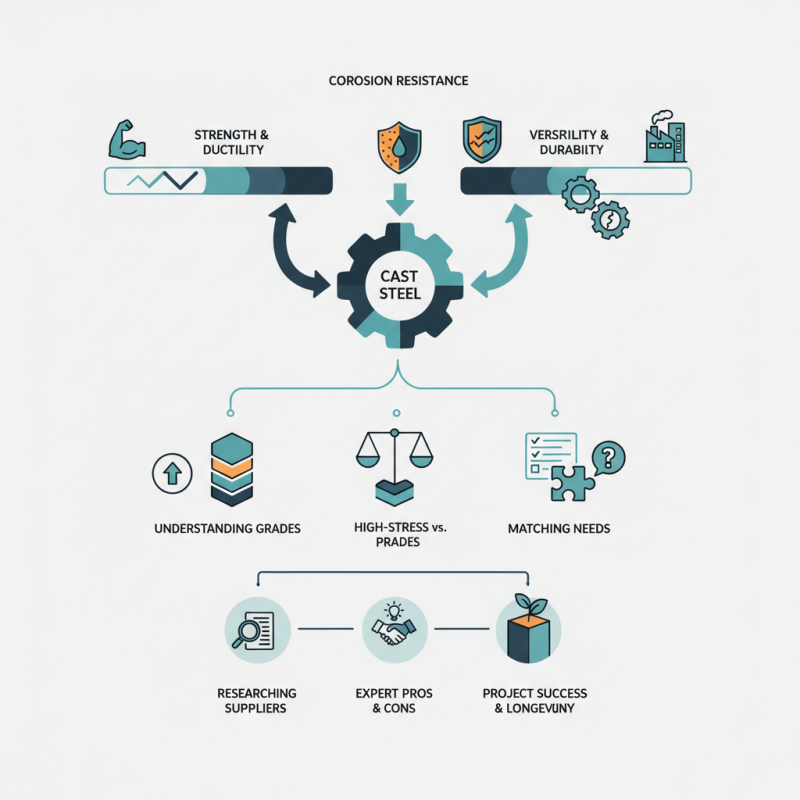
Choosing the right Cast Steel for your project can be daunting. Many factors come into play, including strength, ductility, and corrosion resistance. Cast steel is known for its versatility and durability. It is widely used in various industries, from construction to manufacturing.
Understanding the different grades of cast steel is essential. Each grade has its unique properties that affect performance. Some grades are better for high-stress applications, while others excel in lower-pressure environments. It's crucial to match the grade with your specific needs to avoid potential failures.
Project success often hinges on material selection. Poor choices can lead to costly mistakes. Researching suppliers and seeking expert advice enhances your decision-making process. Reflect on past experiences and weigh the pros and cons. Your project's longevity depends significantly on this critical choice.
Understanding Cast Steel and Its Applications
Cast steel is a versatile material used in various applications. It combines the strength of steel with the casting ability of iron. This unique quality makes it suitable for manufacturing complex shapes. It is widely used in construction, automotive, and machinery sectors. Cast steel offers excellent durability and resistance to deformation under load.
One crucial aspect to consider is the alloying elements in cast steel. These elements can significantly affect its performance. Manganese and silicon improve strength and toughness. Meanwhile, elements like chromium and nickel enhance corrosion resistance. Understanding these properties helps in selecting the right cast steel for specific projects.
However, not all cast steel is perfect for every application. Factors like cost and availability can limit choices. You may find that some types are harder to source or more expensive than others. Therefore, assessing your project's requirements is vital. Be prepared to make compromises based on performance, cost, and long-term use. This reflection can lead to better decision-making in the selection process.
Assessing Different Grades of Cast Steel
When assessing different grades of cast steel, it's essential to understand their unique properties. Cast steel is known for its durability and versatility. It is used in various applications, from automotive parts to industrial machinery. Different grades offer varying strength, ductility, and weldability. For instance, low-carbon cast steel grades are easier to machine. However, they may not withstand high-stress conditions as well as high-carbon counterparts.
The alloying elements play a crucial role in determining the performance of cast steel. Elements like manganese and silicon enhance strength and hardness. Conversely, excessive carbon can make the steel brittle. Careful selection of these elements can lead to a perfect balance for specific projects. While it is tempting to choose higher grades for all applications, this might not always be the best approach. Weight, cost, and availability are vital factors that should influence your choice.
It’s important to test samples when possible. This provides insight into how the cast steel grade behaves under real-world conditions. Knowing the project’s demands is crucial for making the right decision. While higher grades may seem desirable, they could lead to unnecessary expenses. Reflecting on material properties and project requirements is key to achieving optimal results.
Factors Influencing the Selection of Cast Steel
Choosing the right cast steel for a project is crucial. Several factors can significantly influence this selection. Chemical composition is a primary consideration. Different grades of cast steel provide varying levels of tensile strength and ductility. According to a report by the American Iron and Steel Institute, high-carbon grades outperform low-carbon steels in strength but may be more challenging to machine.
Mechanical properties also play a vital role. The yield strength and elongation percentages determine how a material will perform under load. For example, ductile iron has better elongation but may not support as much load as higher-grade carbon steel. Successful projects often require a balance between strength and machinability. Improper selection can lead to costly failures.
Environmental factors should also be noted. Corrosion resistance is critical for projects exposed to harsh conditions. Some cast steels, like stainless variations, resist corrosion effectively. However, their higher cost may not always justify the benefits. Therefore, careful evaluation of the project’s conditions is essential to avoid overspending on materials that may not be necessary. The interplay of these factors requires experience and expertise to ensure optimal choices are made.
Evaluating Mechanical Properties and Performance
When selecting cast steel for your project, understanding mechanical properties is crucial. These properties define how the material performs under stress, temperature changes, and various loads. Tensile strength, yield strength, and hardness are fundamental metrics to evaluate. Each project may require a different balance of these characteristics. For example, a heavy load-bearing application will demand higher tensile strength to prevent structural failure.
Impact resistance is another significant factor. In environments where sudden forces occur, materials must absorb energy without fracturing. High toughness is desirable here. Moreover, consider how temperature affects performance. Some cast steels may become brittle in cold conditions, limiting their usability in specific applications.
Evaluating these properties involves testing samples under controlled conditions. However, data alone may not provide the full picture. Real-world variables can affect how cast steel performs. This unpredictability necessitates thorough evaluations and possibly multiple rounds of testing. Reflecting on project requirements and past performance can guide material selection.
Consider potential flaws in your approach and remain open to adjustments. The goal is to ensure your cast steel choice serves its intended purpose effectively.
Cost Considerations and Budgeting for Cast Steel Projects
When budgeting for cast steel projects, it's essential to analyze various cost factors. The raw material price fluctuates based on supply and demand. This variability can greatly affect your budget. Labor costs should not be overlooked, as skilled workers often command higher wages. Additionally, maintenance and operational costs of machinery can accumulate over time. These aspects must be estimated accurately for effective financial planning.
Tips: Always set aside a contingency budget for unexpected expenses. It’s wise to account for price increases in raw materials or labor shortages. Have backup suppliers in mind, as this can provide flexibility if your primary source faces issues.
Material selection is another crucial consideration. Different grades of cast steel can vary significantly in cost. Cheaper options may seem appealing, but they could compromise quality. When making your decision, balance your requirements against overall project goals.
Tips: Research different suppliers to find a balance between quality and cost. Engaging in discussions can give insights into where savings might be found. Do not hesitate to seek advice from industry professionals; their experience can be invaluable. Adjusting your budget based on reliable forecasts will ensure a smoother project execution.
How to Choose the Best Cast Steel for Your Project? - Cost Considerations and Budgeting for Cast Steel Projects
| Material Grade | Average Cost per Ton (USD) | Common Applications | Strength (MPa) | Notes |
| A27 | $600 | Construction, Machinery | 250-300 | Good for general use |
| A356 | $800 | Automotive, Aerospace | 310-400 | Excellent corrosion resistance |
| C45 | $700 | Machinery Parts, Tools | 400-600 | Good machinability and hardness |
| S235JR | $500 | Construction, Structural | 200-250 | Ideal for welded structures |
| D2 | $900 | Cutting Tools, Dies | 600-800 | High wear resistance |