Choosing the right drum dumper in 2026 requires more than comparing prices and lifting capacities. A suitable machine must match your drum size, material weight, workplace layout, and daily handling routine. A 55-gallon steel drum may behave very differently from a plastic drum, especially on uneven floors or narrow aisles. Small details matter.
The best drum dumper supports safer, cleaner, and more consistent material movement. Look closely at load stability, drum gripping methods, turning radius, lifting height, battery life, and emergency controls. Ask manufacturers for verified specifications, maintenance guidance, and realistic performance data. Operator feedback is equally valuable. People using the equipment every day often notice awkward controls, poor visibility, or difficult cleaning points before managers do.
There is no universal answer.
A powerful drum dumper may be unnecessary for a light-duty warehouse. A compact model may struggle in a busy production area. Published capacity also does not reveal everything. The load center, floor condition, and handling frequency can change real performance. We have seen equipment selected correctly on paper but poorly suited to actual workflow. That mistake deserves attention.
This guide explains how to assess drum dumpers with practical, evidence-based questions. It considers safety features, ergonomics, power systems, service support, and long-term operating costs. The goal is not to recommend the most expensive option. It is to help you choose dependable equipment that fits your people, processes, and facility in 2026.
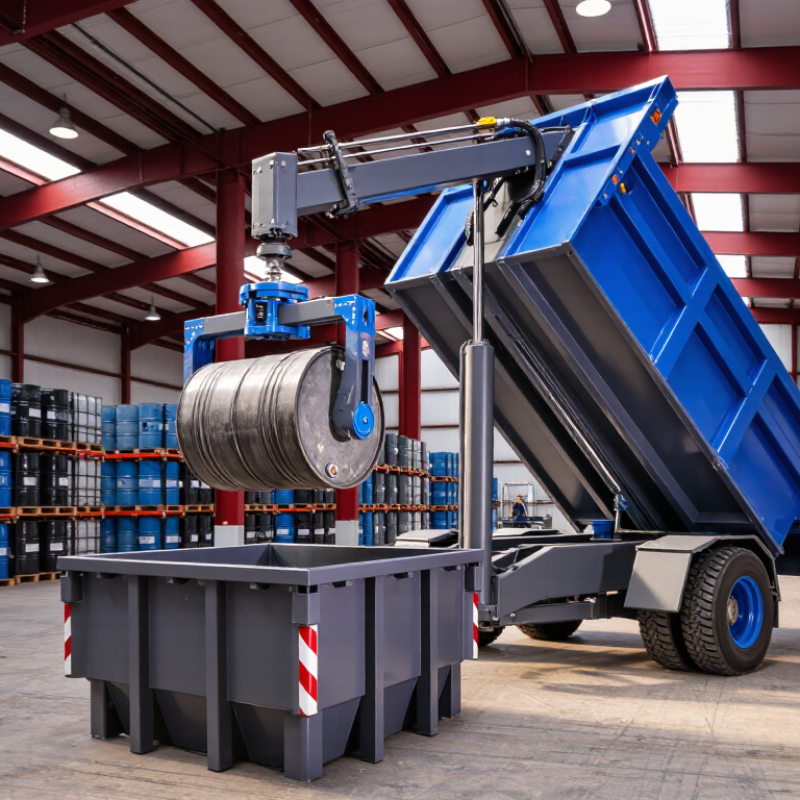
A drum dumper is a powered material-handling machine that lifts, secures, and rotates drums. It transfers liquids, powders, or granular materials into process equipment. The drum rests inside a cradle or between adjustable arms. A clamp holds it firmly. Then a hydraulic, electric, or pneumatic actuator raises and tilts it. Controlled rotation positions the opening above a hopper, mixer, or filling line.
The operating sequence is simple, but small details matter. The operator checks the drum’s weight, diameter, contents, and center of gravity. The machine must match all four. A partial drum can shift unexpectedly. That assumption can fail.
According to the U.S. Bureau of Labor Statistics report Injuries, Illnesses, and Fatalities, private industry recorded about 2.6 million nonfatal workplace injuries and illnesses in 2023. Safe drum handling deserves more than a sales specification.
When choosing a drum dumper in 2026, examine rated capacity, clamp geometry, lifting height, rotation speed, and emergency-stop access. Confirm that the controls remain visible during discharge. Look for guarding around pinch points and clear load charts.
MHI’s 2024 Annual Industry Report reported that 83% of supply-chain professionals planned to increase technology investment, but automation should not replace practical verification.
I would test the dumper with the actual drum, not a convenient substitute. Watch for leaks, frame flex, uneven rotation, and awkward operator posture. A quieter hydraulic system may feel better, yet maintenance access can matter more over five years.
Manual hydraulic drum dumpers suit occasional handling in small warehouses. An operator uses a hand pump to lift and rotate one drum. These units work well near receiving bays, maintenance rooms, and low-volume storage areas. They need little infrastructure, but turning becomes tiring during repeated shifts. Powered hydraulic dumpers provide smoother control for production lines and busy material-handling areas. They can position steel or plastic drums at a measured height. This helps workers transfer powders, liquids, or approved processing materials with fewer awkward movements.
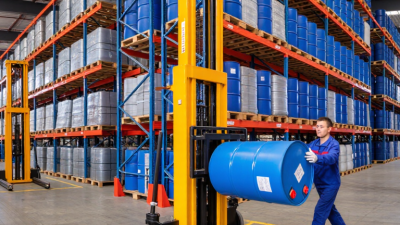
Forklift-mounted drum dumpers serve sites that already use forklifts. They move drums across wider distances and support loading near elevated platforms. However, operators need clear visibility and verified attachment capacity. Electric drum dumpers are useful indoors, especially where exhaust control matters. They often offer quiet movement and precise stopping near filling equipment. Pneumatic models may suit washdown zones or locations with existing compressed-air systems. Their performance depends heavily on stable air pressure.
Check the drum diameter, weight, rim design, and center of gravity before choosing. A model rated for weight alone may still handle a tall, unstable drum poorly. In field evaluations, uneven floors often expose this weakness. Safety locks, guarded controls, emergency stops, and secure drum clamps deserve close inspection. No single type wins every site. A practical choice balances usage frequency, travel distance, available power, and operator training. Mistakes happen when buyers compare lifting capacity but ignore the final pouring angle.
Choosing a drum dumper starts with the real load, not the drum label. A full 200-liter drum may weigh far more than an empty one. Add the drum’s tare weight, liquid or material weight, and any handling attachments. Then compare that total with the dumper’s rated working load limit. Leave practical capacity for movement, uneven floors, and sudden stops.
Drum dimensions matter just as much. Measure diameter, height, rim shape, and center of gravity before ordering. A dumper may support the weight but fail to grip the drum securely. That is a costly mismatch. Check cradle width, clamp travel, lifting height, and discharge clearance. In field inspections, operators often forget the ceiling above the receiving container. I have seen capacity charts look perfect until that detail appears.
Tips: Weigh a filled drum whenever possible. Do not rely on estimated density. Keep heavier contents low and centered. Test the turning path with a marked floor area. Review the equipment manual and site conditions with a qualified supervisor. A spreadsheet helps, but it can still miss slippery floors or flexible drum walls. Recheck those assumptions. Small errors become obvious when the dumper starts moving.
How to Choose the Right Drum Dumper in 2026?
A suitable drum dumper should protect people before it moves materials. Check the rated load, drum dimensions, and center of gravity carefully. A machine may lift the stated weight but still become unstable during rotation. Look for a wide, low frame, reliable braking, and guarding around gears and pinch points. Emergency stops should be easy to reach, clearly marked, and tested during routine inspections. Small details matter.
Ergonomics often separates a practical dumper from an expensive obstacle. Operators should not stretch, twist, or stand beneath a raised drum. Controls should remain visible from the operating position, with buttons large enough for gloved hands. Adjustable handles can reduce shoulder strain for different users. A controlled rotation speed also prevents sudden spills. Test it loaded. An empty demonstration can hide awkward movement and poor balance.
Control features deserve close attention in daily work. Consider interlocks that prevent lifting when the drum is unsecured, along with limit switches and position feedback. Proportional controls may provide smoother tipping than simple on-off switches. Battery indicators, fault displays, and manual recovery options can reduce downtime. During one equipment review, I focused too heavily on lifting capacity and overlooked cleaning access. That mistake was costly in time, not money. A better evaluation includes washdown areas, inspection points, and realistic operator trials. Ask workers to repeat the full task, not just demonstrate a single lift.
Suggested evaluation weighting for comparing drum dumpers by safety, ergonomics, control, and maintainability.
Safety and guarding should receive the highest review priority, followed by ergonomic loading and unloading. Evaluate interlocks, emergency stops, load retention, visibility, reach distance, control accessibility, and tilt stability against the applicable risk-assessment and machine-safety requirements, including OSHA 29 CFR 1910.212, OSHA 29 CFR 1910.147, ISO 12100, and ISO 13849 where relevant. These percentages are planning weights for procurement comparisons, not certification values.
Choosing the right drum dumper in 2026 requires more than comparing purchase prices. Installation conditions strongly affect safety, uptime, and labor costs. Measure the drum diameter, loading height, aisle width, and available floor strength before ordering. A level foundation prevents vibration and uneven lifting. Electrical models also need correctly rated power and protected connections. The U.S. Bureau of Labor Statistics recorded about 2.6 million nonfatal workplace injuries in 2023. Ergonomic access should therefore guide the design, not follow it.
Maintenance planning protects the long-term budget. Inspect hydraulic hoses, chains, brakes, sensors, and drum clamps at scheduled intervals. Keep a written service log with photos and replacement dates. Small leaks are easy to ignore, but they can become costly failures. MHI’s 2024 Annual Industry Report found that 83% of supply-chain professionals viewed innovation as a competitive advantage. That supports investing in monitoring features, although every sensor adds installation and repair complexity. A perfect cost forecast is impossible. Review energy use, spare parts, training, downtime, and cleaning time over five years.
Tips: Request a site survey before approval. Ask for total cost of ownership, not only equipment price. Test the dumper with your heaviest and lightest drums. Confirm emergency-stop access from the operator position. Compare preventive maintenance intervals carefully. Keep critical seals and fuses nearby. Recheck assumptions after three months of operation; real usage often differs from the original plan.
| Decision Dimension | Compact Manual or Semi-Automatic Dumper | Standard Hydraulic Drum Dumper | Heavy-Duty Automated Drum Dumper | Selection and Cost Implication |
|---|---|---|---|---|
| Typical drum capacity | 1 drum; commonly handles 55-gallon / 208-liter drums up to approximately 350 kg. | 1 drum; commonly handles 55-gallon / 208-liter drums up to approximately 450 kg. | 1–2 drums, depending on the design; typical rated loads range from approximately 450 to 1,000 kg. | Choose a rated capacity at least 10–20% above the heaviest actual drum and contents. Never exceed the manufacturer’s rated load. |
| Suitable drum formats | Steel and plastic open-head or tight-head drums, subject to the clamp and cradle design. | Steel, plastic, and fiber drums when the gripping mechanism is compatible with the drum rim or body. | Multiple drum materials and dimensions, often with adjustable clamps, powered rotation, or custom tooling. | Verify drum diameter, height, rim profile, center of gravity, and surface condition before ordering. |
| Typical lift or tipping height | Approximately 0.8–1.5 m, suitable for low-level discharge or pallet transfer. | Approximately 1.2–2.0 m, suitable for bins, hoppers, and process equipment. | Approximately 1.5–3.0 m or more, depending on mast height and facility layout. | Measure the receiving vessel, access height, overhead clearance, and required discharge angle before installation. |
| Power source | Manual hydraulic pump, battery-assisted hydraulics, or low-power electric drive. | Electric-hydraulic power unit, commonly using a three-phase industrial supply. | Electric-hydraulic system with automated controls, sensors, and safety interlocks. | Confirm voltage, phase, frequency, available current, and hazardous-area requirements. Battery models may reduce cabling but require charging infrastructure. |
| Typical equipment purchase range | Approximately US$4,000–US$12,000. | Approximately US$12,000–US$30,000. | Approximately US$30,000–US$80,000 or more. | These are planning ranges for new equipment and exclude taxes, freight, custom tooling, and site modifications. |
| Installation requirements | Level industrial floor, clear travel path, and basic operator training. Anchoring may be unnecessary for some mobile units. | Level reinforced floor, electrical connection, guarding, access clearance, and commissioning inspection. | Detailed layout review, floor-load verification, electrical installation, guarding, control integration, and formal commissioning. | Allow approximately 5–15% of equipment cost for standard installation; complex integration may require more. |
| Floor and access considerations | Low to moderate floor loading; typically easier to move through standard industrial doors. | Moderate to high floor loading; confirm aisle width, turning radius, and door clearance. | High floor loading and larger exclusion zones may be required; confirm structural and traffic-control requirements. | Include the dumper, drum, pallet, operator, and dynamic forces when checking floor capacity and clearance. |
| Cycle speed | Typically slower and dependent on manual handling or operator input. | Typically suitable for low-to-medium production volumes, with adjustable lifting and tipping speeds. | Suitable for high-throughput operation with programmable sequences and repeatable positioning. | Compare complete cycle time, not only lifting speed. Loading, securing, tipping, return, and release all affect productivity. |
| Operator involvement | High; the operator commonly positions, secures, and controls the drum manually. | Medium; hydraulic movement reduces physical effort but positioning and securing remain operator tasks. | Low to medium; automation can reduce handling time, but trained supervision and inspection are still required. | Automation is most valuable where repetitive handling, high throughput, or ergonomic risk justifies the additional investment. |
| Routine maintenance | Inspect wheels, clamps, fasteners, welds, bearings, and manual hydraulic components. | Inspect hydraulic hoses, fittings, oil level, cylinders, valves, clamps, bearings, and electrical controls. | Perform all standard checks plus sensor alignment, PLC or control-system checks, safety interlocks, and automated tooling inspection. | Set daily operator checks, monthly functional inspections, and scheduled preventive maintenance based on duty cycle. |
| Typical preventive-maintenance budget | Approximately US$300–US$1,000 per year. | Approximately US$800–US$2,500 per year. | Approximately US$2,000–US$6,000 per year. | Actual cost depends on operating hours, environment, service access, spare parts, labor rates, and hydraulic-system complexity. |
| Common wear components | Wheels, casters, pins, bushings, clamps, seals, and manual pump components. | Hydraulic hoses, seals, filters, bearings, rollers, pins, clamps, and electrical switches. | All standard wear components plus sensors, control devices, powered tooling, and safety-system components. | Specify readily available standard components where possible and keep critical seals, hoses, and sensors in stock. |
| Expected service life | Approximately 8–12 years with suitable loading and regular maintenance. | Approximately 10–15 years with preventive maintenance and correct operating practices. | Approximately 12–20 years when structural, hydraulic, electrical, and control components are maintained or upgraded. | Service life is not guaranteed; corrosion, overloading, impact, duty cycle, and maintenance quality have major effects. |
| Energy consumption | Low; manual or battery-assisted systems generally consume less electricity during operation. | Moderate; consumption depends on motor size, cycle time, load, and hydraulic efficiency. | Moderate to high; automation may increase installed power but can reduce idle time and handling labor. | Compare annual energy cost with labor savings and throughput improvements rather than evaluating motor power alone. |
| Safety provisions to verify | Positive drum retention, stable base, guarded pinch points, non-slip surfaces, and controlled release. | Load-holding valves, emergency stop, mechanical guarding, drum clamps, overload protection, and safe controls. | All standard provisions plus interlocked gates, presence sensors, programmable limits, and documented risk assessment. | Equipment should be selected and installed in accordance with applicable local workplace-safety and machinery requirements. |
| Environmental suitability | Suitable for clean, dry indoor areas when standard materials are used. | Can be configured for dust, washdown, corrosion, or temperature exposure with appropriate components. | Best for controlled process areas or engineered environments requiring specialized protection and monitoring. | Specify corrosion-resistant materials, sealed electrical enclosures, suitable lubricants, and spill containment where required. |
| Labor and productivity effect | Lowest initial cost but may require more operator time and physical effort per drum. | Good balance for regular production use and moderate drum-handling frequency. | Highest potential labor reduction and repeatability for frequent, standardized drum-handling tasks. | Estimate total labor hours saved per year, including loading, securing, tipping, cleaning, and drum repositioning. |
| Indicative 10-year ownership cost | Approximately US$8,000–US$25,000, excluding major building work and labor savings. | Approximately US$22,000–US$65,000, excluding major building work and labor savings. | Approximately US$55,000–US$150,000 or more, excluding major building work and labor savings. | Ownership cost should include purchase, installation, energy, inspections, maintenance, spare parts, downtime, and eventual refurbishment. |
| Best-fit application | Occasional drum transfer, small facilities, low throughput, or operations with limited automation needs. | Regular production, one-drum-at-a-time handling, moderate throughput, and balanced capital cost. | High-volume processing, repetitive tipping, integrated production lines, or operations with significant ergonomic risk. | Choose the simplest model that meets capacity, safety, throughput, and environmental requirements without creating future bottlenecks. |

Cost figures are indicative 2026 planning ranges in U.S. dollars for comparable new equipment. Actual prices vary by load rating, lift height, controls, materials, safety features, installation conditions, labor rates, and regional regulations. Final selection should be confirmed through a site survey, drum compatibility test, risk assessment, and supplier quotation.