How to Choose the Right Forklift Drum Tipper?

Choosing the right forklift drum tipper is not simply a matter of matching a drum to a machine. In a busy warehouse, the wrong attachment can shift the load, limit visibility, or create awkward handling near pallets and shelving. A reliable choice begins with the drum’s material, size, weight, rim design, and pouring requirements.

Small details matter. Is the drum steel, plastic, or composite? Does it need a full 180-degree rotation? Can the forklift safely carry the combined attachment and drum weight? These questions should be answered before purchase. Experienced operators also inspect the locking mechanism, hydraulic controls, rotation speed, and attachment balance. A forklift drum tipper should hold the container firmly without damaging its surface or relying on improvised restraints.

Manufacturer load charts and technical drawings provide a useful starting point. However, catalog figures may not reflect your actual floor conditions, aisle width, drum condition, or operator skill. That is where careful site assessment becomes valuable. Test the attachment with a controlled, non-hazardous load when possible. Watch for excessive tilt, poor visibility, and unexpected movement.

No single model suits every operation. A compact tipper may improve maneuverability but offer less capacity. A heavier design may feel stable but reduce available forklift payload. This trade-off is easy to overlook. Review maintenance access, training needs, inspection routines, and supplier support before deciding. The best forklift drum tipper is not merely the strongest option; it is the one that fits your equipment, workflow, and safety expectations with dependable control.

How to Choose the Right Forklift Drum Tipper?

Understanding Forklift Drum Tippers and Their Main Functions

How to Choose the Right Forklift Drum Tipper?

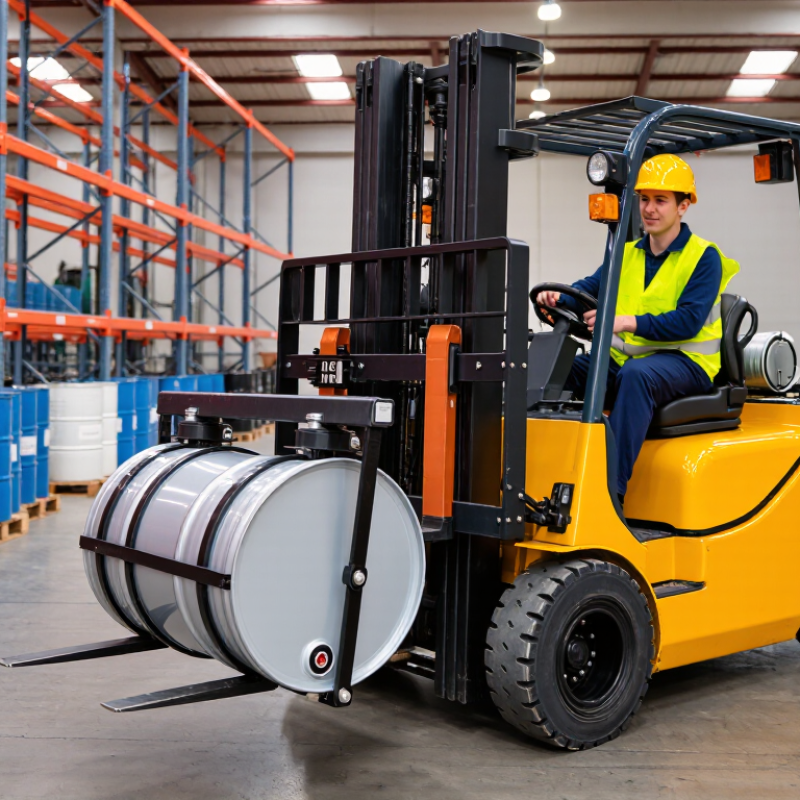
A forklift drum tipper is an attachment designed to lift, secure, rotate, and empty drums. It usually connects to the forklift forks and holds the container with a clamp, chain, or locking frame. During operation, the attachment keeps the drum balanced while the forklift raises it. The rotation system then tilts the drum toward a tank, hopper, or work area. Controlled pouring reduces manual handling and helps limit spills.

The main function is controlled drum movement. However, the right tipper depends on more than lifting capacity. Check the drum diameter, height, weight, and material before choosing. Steel and plastic drums may need different holding methods. Fork pocket size also matters. A poor fit can cause movement during travel. Confirm the forklift’s rated capacity at the attachment’s load center. This detail is often missed.

In routine warehouse work, operators should inspect locks, chains, welds, and moving parts before use. Some tippers offer manual rotation, while powered systems provide smoother control for frequent handling. A simple model may suit occasional use, but it can slow production. A powered model may improve control, yet it adds cost and maintenance needs. There is no perfect choice. I have seen teams focus only on drum weight and overlook visibility, clearance, and operator training. That shortcut deserves reconsideration. Always follow the attachment instructions, site procedures, and applicable safety requirements.

Identifying Drum Types, Sizes, Weights, and Material Compatibility

How to Choose the Right Forklift Drum Tipper?

Choosing a forklift drum tipper starts with identifying the drum, not the attachment. Check whether it is closed-head, open-head, plastic, steel, or fiber. Measure its diameter, height, and rim shape. Common capacities include 60, 120, and 200 liters, but dimensions can vary. Measure twice.

Weight is equally important. Record the empty drum weight and its maximum filled weight. Then check the forklift’s capacity at the attachment’s actual load center. A full drum may shift forward during tipping, reducing safe lifting capacity. Never rely on the forklift’s highest rated load alone. Load charts are practical tools, not decoration.

Material compatibility also affects long-term reliability. Steel gripping surfaces may mark thin plastic drums or polished containers. Abrasive contact can weaken fiber drums. For corrosive contents, confirm that clamps, pins, seals, and painted surfaces resist exposure. Check the tipping angle and locking method before purchase. The drum should remain stable while rotating, even on slightly uneven floors. I would also inspect the rim after several cycles, because small deformation may not appear during a showroom test. That detail is easy to miss. Ask whether the tipper supports the drum’s center of gravity, not merely its outside diameter. A seemingly suitable attachment can still perform poorly when the drum is tapered, dented, or unevenly filled.

How to Choose the Right Forklift Drum Tipper? - Identifying Drum Types, Sizes, Weights, and Material Compatibility

Drum Type Nominal Capacity Typical External Dimensions Typical Empty Drum Weight Typical Full Gross Load* Common Drum Material Recommended Tipper Contact Material Compatibility Important Selection Checks
Small steel drum 15 gal / approximately 57 L Approximately 380–400 mm diameter × 600–620 mm high 7–12 kg 65–75 kg with a water-like liquid Carbon steel or stainless steel Adjustable cradle, rim clamp, or band clamp Suitable for many oils, coolants, chemicals, and powders when the drum lining and seals are appropriate Confirm the cradle can securely support the smaller diameter without crushing the wall
Standard steel drum 30 gal / approximately 114 L Approximately 480–490 mm diameter × 800–850 mm high 14–20 kg 130–140 kg with a water-like liquid Carbon steel, stainless steel, or lined steel Full-height cradle or positive rim-and-body clamp Good general-purpose option; verify corrosion resistance for acids, alkalis, and solvents Check the drum height, center of gravity, and discharge clearance during rotation
Standard steel drum 55 gal / approximately 208–210 L Approximately 570–610 mm diameter × 850–900 mm high 16–25 kg 225–240 kg with a water-like liquid Carbon steel, stainless steel, or lined steel Fixed or adjustable cradle with positive locking and drum retention Suitable for many industrial liquids and solids if the drum construction is chemically compatible Verify rated capacity, forklift load-center reduction, clamp engagement, and complete rotation range
Plastic closed-head drum 55 gal / approximately 208–220 L Approximately 580–600 mm diameter × 880–950 mm high 9–18 kg 220–240 kg with a water-like liquid High-density polyethylene, commonly HDPE Wide-area cradle or clamp designed to avoid point loading Often compatible with water-based products, detergents, and many chemicals; compatibility depends on the HDPE grade and contents Avoid sharp clamp edges and excessive pressure that may deform or puncture the drum
Plastic open-head drum 55 gal / approximately 208–220 L Approximately 580–610 mm diameter × 850–950 mm high 10–20 kg 220–240 kg with a water-like liquid HDPE with a removable lid and sealing ring Cradle or full-body retention system; do not rely only on the lid ring Common for powders, viscous liquids, and solids; confirm lid, gasket, and wall compatibility Ensure the lid and closure remain secure throughout tipping and that the opening is accessible for discharge
Fiber drum 30–55 gal / approximately 114–210 L Approximately 480–610 mm diameter × 700–950 mm high 8–25 kg 120–230 kg depending on contents and construction Paperboard or fiberboard with a liner Full-support cradle with low-pressure retention Best for dry powders and granules; moisture-sensitive contents require a suitable inner liner Prevent moisture exposure, edge damage, excessive compression, and impact during rotation
Overpack drum 85–110 gal / approximately 320–416 L Approximately 760–900 mm diameter × 900–1,200 mm high 35–80 kg 350–500 kg depending on fill level and contents Steel or high-density polyethylene Heavy-duty full-body cradle with positive mechanical retention Typically used for damaged, leaking, or incompatible inner containers; verify regulatory requirements Check forklift capacity at the actual load center, attachment rating, clearance, and controlled tipping speed
Stainless-steel drum 30–55 gal / approximately 114–210 L Usually similar to standard 30- or 55-gallon drum dimensions 20–35 kg 135–245 kg with a water-like liquid Stainless steel, with optional sanitary or chemical-resistant finishes Non-marring cradle or corrosion-resistant clamp Often selected for food, pharmaceutical, and corrosive-material handling; confirm the exact alloy and surface finish Prevent galvanic corrosion and surface contamination; use compatible contact materials
Selection Notes: The dimensions and weights shown are typical planning ranges rather than universal specifications. Actual values vary by drum design, wall thickness, closure type, liner, and contents. Calculate the gross load as drum tare weight plus product weight, and verify the forklift’s rated capacity at the combined attachment load center.
Compatibility Checklist: Confirm the drum tipper’s contact surfaces, seals, coatings, and clamps are compatible with the drum material and the product being handled. Review chemical resistance, temperature limits, load stability, spill containment, discharge position, and applicable workplace-safety requirements before operation.

Checking Forklift Capacity, Attachment Fit, and Workplace Requirements

How to Choose the Right Forklift Drum Tipper?

Checking Forklift Capacity, Attachment Fit, and Workplace Requirements

A suitable drum tipper begins with the forklift’s real working capacity. Do not rely only on the capacity plate. The attachment itself adds weight to the load. A 2,000-kilogram forklift may lift far less at an extended load center. Check the drum’s weight, the tipper’s weight, and their combined center of gravity. Keep a clear safety margin.

Attachment fit matters just as much. Confirm the fork pocket dimensions before delivery. The forks should enter fully and remain evenly spaced. Check the locking system for secure engagement during travel and tipping. Hydraulic models also need compatible connections, pressure, and flow. Poor alignment can cause movement, damaged equipment, or an unstable drum. That detail is easy to miss.

Workplace conditions shape the final choice. Measure aisle width, door clearance, rack height, and floor strength. Consider whether operators must pour into a mixer, hopper, or low container. A tight work area may require controlled rotation and better visibility. Inspect drums for dents, uneven rims, or damaged lids. They may not sit securely. Spill control, operator training, and pre-use inspections should match the material being handled. I have seen teams focus on lifting capacity while overlooking turning space. That mistake can make a technically suitable attachment impractical. Recheck the setup with an operator before purchase.

Comparing Tipping Mechanisms, Safety Features, and Operator Controls

Choosing the right forklift drum tipper starts with its tipping mechanism. A fixed cradle suits repeated handling, while a powered rotator offers controlled pouring. Hydraulic rotation should move steadily, without sudden stops. Check the rated load, drum diameter, and center-of-gravity limits together. A secure locking arm matters more than a fast cycle. In daily warehouse use, loose drums can shift during braking. That detail is easy to underestimate.

Safety controls deserve equal attention. OSHA estimates that powered industrial trucks cause about 85 workplace deaths and 34,900 serious injuries annually, according to its Powered Industrial Trucks safety guidance. Select a tipper with positive drum retention, an anti-drop feature, and visible locking indicators. Mechanical guards should protect hands near pinch points. The attachment must also preserve forklift capacity and visibility. A warning label alone is not enough.

Operator controls should be simple under pressure. Proportional rotation allows careful discharge into narrow containers. A deadman control, emergency stop, and controlled return function reduce unintended movement. Pendant controls can improve visibility when the operator stands beside the load. However, remote control layouts may increase confusion if training is weak. I prefer controls that match existing site procedures. Small inconsistencies become expensive mistakes. Review ISO 3691-5 guidance and site risk assessments before purchase. Even experienced operators can miss a partially engaged latch.

How to Choose the Right Forklift Drum Tipper?

Comparing tipping mechanisms, safety features, and operator controls

The chart uses a comparative 1–5 engineering rating, where 5 indicates stronger suitability for the listed criterion. Manual mechanical units generally offer simple controls and low maintenance, while hydraulic and powered hydraulic systems provide greater control during lifting and tipping. Actual performance depends on drum weight, load center, attachment design, floor conditions, operator training, and the safety requirements of the workplace.

Selecting, Inspecting, and Maintaining the Right Drum Tipper

How to Choose the Right Forklift Drum Tipper?

Selecting, Inspecting, and Maintaining the Right Drum Tipper

Selecting a drum tipper starts with the load, not the attachment. Confirm the drum material, diameter, height, weight, and center of gravity. Check the tipper’s rated capacity at the intended tilt angle. Also verify the forklift’s reduced capacity when the attachment increases load distance. A poor fit can turn a stable drum into a swinging load. Retention arms, locking pins, and drum supports should match the container securely. OSHA reports approximately 85 forklift-related fatalities and 34,900 serious injuries annually in the United States. That figure supports careful attachment selection, not quick purchasing. Source: OSHA, Powered Industrial Trucks Safety Guidance.

Inspect the tipper before every shift. Look for cracked welds, bent frames, worn pins, loose fasteners, damaged chains, and hydraulic leaks. Test the locking mechanism with an empty drum first. The load should remain controlled during lifting, rotating, and lowering. HSE guidance recommends pre-use checks and planned thorough examinations for lifting equipment. Source: UK HSE, Workplace Transport Safety Guidance. Do not rely on appearance alone. Clean steel can hide fatigue.

Maintenance needs records, not memory. Lubricate pivot points as specified, replace damaged safety labels, and remove defective equipment from service. Recheck bolts after early use, because settling can loosen connections. Operators also need practical training with the actual attachment. A checklist may create false confidence. It cannot replace judgment around uneven floors, damaged drums, or changing loads. When conditions differ, stop and reassess.