
What Are the Top 10 Dressing Table Designs?
A Dressing Table can be more than a place to get ready. It can bring order to a bedroom, add character, and make a small daily routine feel calmer. Yet the right design depends on the room, the user, and what needs to be stored. A narrow wall may call for a slim console, while a larger bedroom can make space for a statement piece with drawers and a broad mirror. Practical details count: drawer depth, lighting, seat clearance, and the way the surface handles everyday clutter. Looks matter, too.
Designer and writer William Morris offered a useful principle: “Have nothing in your houses that you do not know to be useful, or believe to be beautiful.” His words were not about dressing tables specifically, but they capture the balance these designs need. A table may look elegant in a photograph and still feel awkward beside a bed or beneath a low window. That is worth remembering. No single style suits every home, and even a clever design can disappoint if its proportions are wrong. This guide explores ten popular Dressing Table designs, from compact and wall-mounted options to classic, modern, and vanity-inspired forms. It considers their appearance, storage, and best-fit settings, so you can compare them with your own space in mind. Some trade-offs remain. That is normal. A thoughtful choice starts with how you actually use the room.
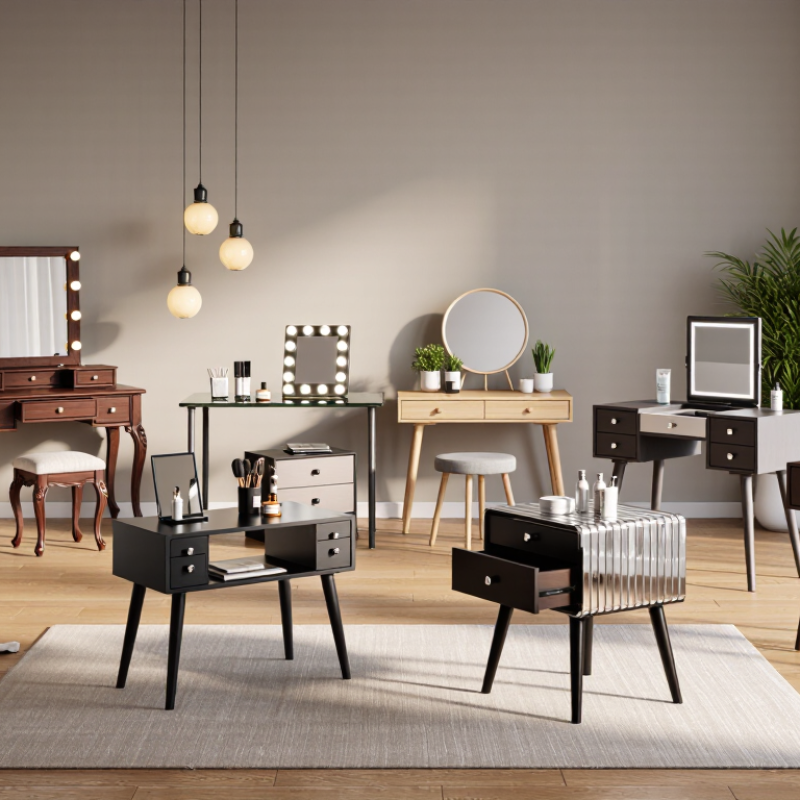
What a Dressing Table Is and How Its Design Shapes Its Use
A dressing table is a grooming station, not merely a small desk with a mirror. Its surface holds daily essentials, while drawers, lighting, seating, and mirror position shape how comfortably someone can use it. A shallow top may suit a compact bedroom, but it can leave little room for a brush, cosmetics, and an open compact. Small details matter.
The 2024 U.S. Bathroom Trends Study found that 84% of renovating homeowners added storage. Although bathroom upgrades are not dressing-table purchases, the figure points to a practical need: frequently used items should be easy to reach. A shallow top drawer can hold small tools; deeper drawers can hide bottles and spare linens. Keep the mirror near eye level, and place light on both sides when possible. Overhead light alone can cast shadows across the face.
The best layout depends on the routine. Someone who sits to apply makeup needs knee space and a stable chair; a standing user may prefer a narrower console. Leave a clear landing area beside the mirror. It sounds minor, but crowded surfaces become frustrating fast. Measure the room with the chair pulled out, not tucked in. One caution: storage-heavy designs can look tidy in photographs yet feel cramped during real use. The study reflects bathroom renovations, so its findings should guide—not dictate—bedroom furniture choices.
What Are the Top 10 Dressing Table Designs? — What a Dressing Table Is and How Its Design Shapes Its Use
| Design | Typical Form and Features | Storage | Best Suited To | How the Design Shapes Its Use |
|---|---|---|---|---|
| 1. Classic Vanity | A freestanding table with a central mirror, a broad top, and balanced drawer or leg details. | Usually several drawers for cosmetics, brushes, and accessories. | Bedrooms with enough floor space for a dedicated grooming area. | The generous surface and integrated mirror support seated grooming and keep everyday items close at hand. |
| 2. Compact Bedroom Vanity | A narrow, small-footprint table, often with a simple mirror and a lightweight stool. | One or two shallow drawers, sometimes supplemented by small organizers. | Small bedrooms, apartments, or occasional-use dressing areas. | Its reduced depth preserves walking space, though the limited surface calls for careful organization. |
| 3. Wall-Mounted Vanity | A table or shelf fixed to the wall, typically with a separate wall mirror and no floor-standing legs. | Storage varies; some models have a slim drawer, while others rely on wall shelves. | Rooms where open floor space and a visually light appearance are priorities. | The open area beneath makes floor cleaning easier and allows the table height to be planned for the user. |
| 4. Floating Drawer Vanity | A wall-fixed drawer unit with a clear space below and a mirror mounted above it. | Enclosed drawer storage keeps small items out of sight. | Modern rooms and narrow spaces where a streamlined look is preferred. | The drawer provides concealed storage without a full set of legs, but wall support and installation must suit the load. |
| 5. Dressing Table with Flip-Top Mirror | A tabletop mirror that folds down into or over the surface when not in use. | Often includes compartments beneath the hinged top, with additional drawers in some versions. | Multipurpose bedrooms where the surface may also be used for other tasks. | Closing the mirror can reclaim the tabletop, while the concealed compartments help organize small grooming items. |
| 6. Dressing Table with Tri-Fold Mirror | A central mirror with two side panels that open outward. | Storage is commonly provided by drawers beneath the table surface. | Users who want to view their appearance from more than one angle. | The side panels broaden the viewing angle; the opened panels need enough clearance from nearby walls or objects. |
| 7. Corner Dressing Table | An angled or L-shaped tabletop designed to fit into a room corner. | May use corner drawers, small cabinets, or shelves above the work surface. | Bedrooms with an unused corner or a layout that limits placement along a full wall. | Its shape makes use of corner space, but the mirror and seat should be positioned so the user can sit comfortably. |
| 8. Dressing Table with Integrated Lighting | A vanity mirror paired with built-in or attached lights around its edge or sides. | Storage depends on the table and may include drawers or open compartments. | Grooming areas where consistent, close-up illumination is useful. | Purposeful lighting can make detail work easier; placement and brightness should avoid glare and harsh shadows. |
| 9. Dressing Table with Open Shelving | A tabletop paired with visible shelves, cubbies, or side compartments instead of relying solely on drawers. | Open storage keeps frequently used products accessible and easy to see. | Users who prefer quick access and have a manageable number of regularly used items. | Visible storage makes items easy to reach but can look cluttered unless products are arranged neatly. |
| 10. Dressing Table with Stool Storage | A table designed to pair with a stool that can tuck fully or partly beneath the top. | The stool may be hollow or lift-top; table drawers provide additional storage when included. | Rooms where keeping the seat out of the way is important. | A tucked-in stool reduces obstruction when the table is not in use; seat height should allow a comfortable position at the mirror. |
What is a dressing table? It is a table or vanity arranged for personal grooming, typically used with a mirror and a seat. Its mirror placement, surface area, storage, lighting, and footprint determine how comfortably it fits into a daily routine.