Choosing among China’s industrial carts manufacturers takes more than comparing prices or polished product photos. A cart may look sturdy online, yet wobble when loaded with metal parts on a factory floor. Buyers should examine frame material, rated capacity, caster quality, weld consistency, and replacement-part support. Ask for drawings, test details, and clear answers about customization. Small details matter.
Lean manufacturing pioneer Taiichi Ohno wrote, “Where there is no standard, there can be no kaizen.” His principle offers a useful lens for evaluating cart makers: repeatable dimensions, documented inspections, and consistent production can matter as much as a low quote. Ohno was not a cart-industry specialist, so this is a manufacturing principle, not a direct product endorsement.
This guide looks at leading Chinese suppliers through practical criteria, including product range, manufacturing capability, quality controls, and export support. It also considers whether a maker can build carts for narrow aisles, heavy components, or frequent washdowns. Those needs are not interchangeable. A mismatch can create daily delays.
There is no perfect shortlist for every buyer. Public product claims may not reveal how a cart performs after months of hard use. Treat rankings as a starting point, then request current specifications and verify them with samples or references. That extra check takes time. It can prevent a costly choice.
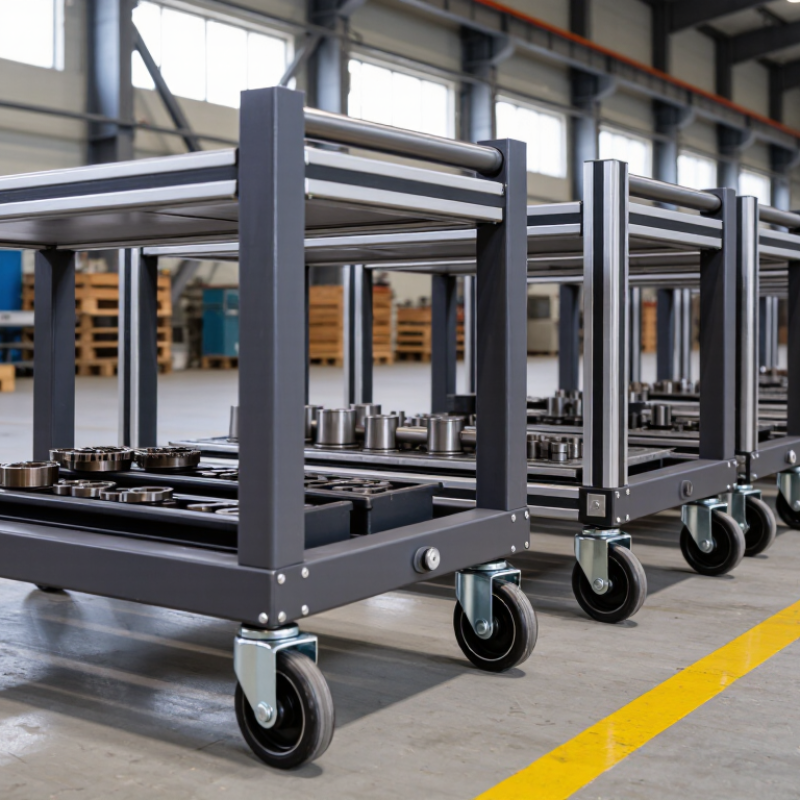
Industrial carts are wheeled platforms or shelving units that move materials through factories, warehouses, laboratories, and service areas. Common designs include flatbed carts for bulky loads, shelf carts for smaller parts, and platform trucks for boxes or tools. Their purpose is simple: keep goods moving without repeated hand-carrying. Not always glamorous.
A useful cart matches its load and route. A narrow aisle may call for a compact frame, while a long corridor benefits from larger wheels that roll over floor joints. Brakes help when workers load items on a slope, and handles should allow a steady, neutral grip. In practice, poor wheel maintenance or an overloaded top shelf can make a cart harder to control. Small details matter.
The U.S. Bureau of Labor Statistics reported 2.6 million nonfatal workplace injury and illness cases in private industry in 2023, or 2.4 cases per 100 full-time equivalent workers. This figure is not specific to cart use, but it underscores why material movement deserves careful planning. Choose carts by payload, turning space, floor condition, and frequency of use—not appearance alone. A short route can still be awkward. Teams should test a loaded cart on the actual path and review how it handles corners, thresholds, and stopping points.
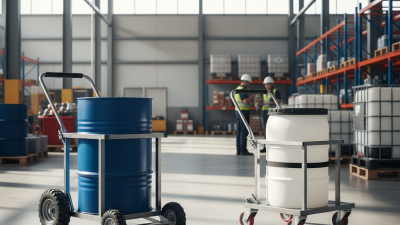
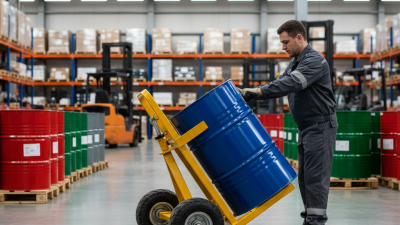
Industrial carts move materials, tools, and goods through workplaces such as warehouses, factories, and workshops.
The bars show indicative load-capacity ranges commonly found across these cart types, not a market survey or a guarantee for every model. Platform and cage carts are often used for bulk loads; hand trucks help move stacked items; picking and utility carts support order picking and tool transport. Always check the rated capacity of the specific cart.
Choosing an industrial cart manufacturer in China takes more than comparing quotations. Start with the job the cart must perform: its load, route, floor surface, and daily use. Ask for rated capacity, platform dimensions, handle height, and wheel specifications. For example, a cart crossing floor joints may need larger wheels than one used on smooth warehouse concrete. Small details matter.
Review how the manufacturer checks quality, not just what its brochure promises. Ask whether welds, brakes, and wheel movement are inspected before shipment. Request material details and a sample inspection report. If possible, test a sample with a representative load and push it over the actual floor. Listen for rattling and check whether it turns easily. A tidy sample still may not match a full production run.
Discuss customization, lead times, replacement parts, and packaging before placing an order. Get key specifications and acceptance criteria in writing, then confirm them against the delivered cart. Communication during sampling can reveal how clearly the supplier handles changes. It is not a perfect predictor. A first sample may need adjustment, and even a careful checklist can miss a practical issue. Keep notes from testing and resolve those details before production begins.
China’s leading industrial cart manufacturers are best judged by load capacity, frame construction, wheel choice, and test documentation—not catalog claims alone. The China Federation of Logistics and Purchasing reported that China’s total social logistics value reached 352.4 trillion yuan in 2023, up 5.2% year over year. This growth points to sustained demand for moving goods efficiently across factories and warehouses, though it does not rank cart suppliers directly. Buyers should compare rated loads, platform dimensions, brake performance, and turning radius against real aisle and floor conditions.
On a production floor, small details matter: a cart carrying steel parts needs sturdy welds, secure handles, and wheels suited to uneven concrete. Ask manufacturers for load-test records and inspect samples for deck thickness and finish quality. A lower quote can look tempting; it may leave wheel specifications or service terms unclear. Rankings are imperfect. A supplier that handles custom sizes well may suit one plant, while another needs fast delivery of standard models. China’s strongest manufacturers distinguish themselves through consistent quality checks, clear technical documents, and practical support after delivery.
Chinese industrial cart manufacturers differ less by catalogue size than by how well their products fit daily workflows. Compare platform carts, warehouse picking carts, and heavy-duty models by rated load, deck dimensions, wheel material, and braking options. A cart carrying metal parts across a smooth factory floor needs different casters from one crossing expansion joints. Ask for load-test records and drawings, not just a product photo. Fit matters.
Service capability matters just as much. Check whether the manufacturer can adjust handle height, shelf spacing, or finish, and confirm minimum order quantities and spare-wheel availability. MHI’s 2024 Annual Industry Report found that 55% of surveyed organizations planned to increase supply-chain technology investment. This is not cart-specific data, but it reflects growing pressure to improve material flow. Request a sample, inspect welds and wheel noise, and agree on lead time in writing. Small details can still be missed.
Tips: Send a simple route map and the heaviest load before requesting a quote. Ask who handles warranty claims and how replacement parts are shipped. A low price can be tempting; total operating cost deserves a second look.
| Manufacturer Profile | Typical Products | Common Capabilities | Service Considerations | Best Suited For | Checks Before Ordering |
|---|---|---|---|---|---|
| General-purpose trolley specialist | Platform trucks, hand trucks, folding carts, and utility trolleys. | Offers multiple deck sizes, handle styles, wheel types, and load configurations; commonly uses steel or aluminum frames. | May support standard-product orders, packaging customization, and export documentation. Confirm spare-wheel availability and packing method. | Warehouses, workshops, retail backrooms, and general internal transport. | Request rated-load information, wheel material and diameter, platform dimensions, and test or inspection records for the specific model. |
| Warehouse material-handling equipment specialist | Picking carts, shelf trolleys, cage carts, and multi-tier warehouse carts. | Can configure shelves, mesh sides, braking wheels, and handles for different workflows; some suppliers offer drawing-based customization. | Ask whether layout changes affect minimum order quantities, production lead time, or replacement-part supply. | Distribution centers, order-picking operations, and factory logistics. | Check overall dimensions, shelf spacing, caster arrangement, braking options, and compatibility with aisles and storage systems. |
| Stainless-steel cart specialist | Stainless utility carts, food-service carts, and carts for washdown or clean working areas. | Fabrication may include welded or bolted frames, stainless shelves, and smooth or rounded edges. Stainless grade and finish should be specified. | Clarify the material grade, surface finish, weld quality, and cleaning requirements rather than relying on a generic “stainless” description. | Food processing, commercial kitchens, laboratories, and other environments where corrosion resistance and cleanability matter. | Confirm the stainless-steel grade, thickness, finish, load rating, and suitability for the chemicals or cleaning procedures used on site. |
| ESD and electronics-cart specialist | Conductive or static-dissipative carts, electronics workstations, and component-handling trolleys. | May offer ESD-compatible surfaces, grounding features, and conductive or dissipative casters; performance depends on the complete cart configuration. | Request product-specific test results and instructions for grounding, maintenance, and replacement components. | Electronics assembly, repair areas, and facilities with documented electrostatic-control procedures. | Verify resistance or other relevant ESD specifications for the assembled cart, including its surface, wheels, and grounding path. |
| Custom-fabrication cart supplier | Made-to-drawing carts, equipment dollies, machine-side trolleys, and application-specific transport frames. | Can work from customer drawings or samples; available processes may include cutting, bending, welding, coating, and assembly. | Agree on drawing approval, prototype review, change control, inspection criteria, and ownership of design files before production. | Specialized production lines and applications that cannot be served by standard catalog carts. | Confirm material specifications, tolerances, finish, load distribution, sample approval, and acceptance criteria in writing. |
| This comparison describes common industrial-cart supplier specializations in China; it is not a verified ranking of individual companies. Actual product ranges, manufacturing capabilities, certifications, and service levels vary by supplier and should be confirmed for the specific model and order. | |||||
Choosing a Chinese industrial cart manufacturer starts with the work the cart must perform. Record the heaviest load, aisle width, turning space, and floor condition. Define the job clearly. A cart for smooth warehouse floors may struggle on cracked concrete. Ask how the frame, shelves, handles, and wheels are sized for your actual operating conditions.
Request drawings, material specifications, load-test details, and a sample before approving a large order. Look closely. Check weld consistency, sharp edges, wheel attachment, and whether the cart rolls smoothly when loaded. Ask how the manufacturer handles design changes and quality checks during production. Clear, specific answers matter more than polished sales language. Still, a sample cannot reveal every issue; test it in a realistic shift if possible.
Compare the full cost, including packaging, shipping, spare wheels, and replacement parts. Confirm production timelines and how problems are documented and resolved. If communication feels unclear during quoting, it may not improve after production begins. I would avoid choosing on price alone, though I have seen buyers underestimate how much a small wheel or handle change can affect daily use. A modest pilot order can expose those details before they become expensive.