
What Are the Top Lift Truck Types in 2026?
What Are the Top Lift Truck Types in 2026? The answer depends on the work, not just the newest technology. A busy warehouse may need electric counterbalance trucks for clean indoor handling. Narrow-aisle operations often benefit from reach trucks with precise mast control. Pallet trucks remain useful for short moves and fast loading tasks.
Real operating conditions matter. A lift truck must match the load weight, aisle width, floor quality, and duty cycle. Battery charging space also affects the final choice. For example, lithium-ion models can support frequent shifts, but their purchase price may challenge smaller businesses. Internal combustion trucks still serve outdoor yards where rough surfaces and heavy loads are common.
Details decide performance. A cold-storage warehouse may require equipment designed for low temperatures. An order-picking truck can improve access to high shelves, but it may require stronger operator training. Rough-terrain models offer stability on uneven ground, although they are rarely the best choice inside a compact facility. Automated guided lift trucks can reduce repetitive travel, yet they depend on accurate floor routes and reliable system integration.
There is no universal winner. Some fleets still overbuy capacity and underuse advanced features. That mistake deserves attention. This guide compares the leading lift truck types expected in 2026, using practical factors such as safety, productivity, maintenance, energy use, and total operating cost. It also considers operator visibility, control comfort, and real workplace constraints. The goal is a clearer decision, not a fashionable one.

Lift Truck Basics and Their Role in Material Handling
What Are the Top Lift Truck Types in 2026?
Lift Truck Basics and Their Role in Material Handling
Lift trucks turn storage space into working space. Counterbalance trucks handle pallets at docks, racks, and production lines. Reach trucks work in narrow aisles, where every extra inch matters. Pallet trucks move loads across short distances with less effort. Order pickers raise operators to selected cartons, while rough-terrain trucks serve outdoor yards and uneven ground.
Electric models are gaining attention because they reduce indoor exhaust and often support quieter operations. MHI’s 2024 Annual Industry Report found that 55% of respondents planned to increase supply-chain technology investment. That investment can include fleet monitoring, automated guided vehicles, and battery-management systems. Yet technology does not remove basic risks. The U.S. Occupational Safety and Health Administration estimates that powered industrial trucks cause about 85 workplace deaths and 34,900 serious injuries annually. A modern truck still needs trained operators, clear aisles, and controlled speeds.
A neat category chart can mislead. Capacity, lift height, floor condition, turning radius, and shift length change the correct choice. A small pallet truck may outperform a larger vehicle in a crowded staging area. It depends.
Tips: Measure the aisle before choosing the truck. Check load centers, ramp grades, and floor strength. Match the truck to the task, not the catalog photo. Record near misses, battery delays, and operator feedback. These details often reveal problems that purchase data misses.
What Are the Top Lift Truck Types in 2026? - Lift Truck Basics and Their Role in Material Handling
| Lift Truck Type | Typical Power Source | Typical Rated Capacity | Typical Maximum Lift Height | Typical Aisle Requirement | Primary Material-Handling Role | Best Operating Environment | Key Advantages | Important Limitations |
|---|---|---|---|---|---|---|---|---|
| Counterbalance Forklift | Electric battery, liquefied petroleum gas, diesel, or gasoline | 3,000–15,000 lb (1,360–6,800 kg) |
10–20 ft (3.0–6.1 m) |
Approximately 11–13 ft (3.4–4.0 m) |
Loading and unloading trucks, transporting pallets, and general warehouse or production handling | Warehouses, manufacturing plants, distribution centers, loading docks, and selected outdoor areas | No front stabilizing legs; handles many standard pallets and attachments; versatile across applications | Requires more turning space than reach trucks; internal-combustion models can produce emissions and noise indoors |
| Electric Counterbalance Forklift | Lead-acid or lithium-ion battery | 3,000–8,000 lb (1,360–3,630 kg) |
10–20 ft (3.0–6.1 m) |
Approximately 11–13 ft (3.4–4.0 m) |
Indoor pallet movement, dock work, and loading operations where low emissions are required | Food, beverage, pharmaceutical, retail, and enclosed warehouse environments | Zero tailpipe emissions during operation; relatively quiet; suitable for sensitive indoor areas | Battery charging or replacement must be planned; performance can be affected by extreme temperatures and rough surfaces |
| Reach Truck | Electric battery | 2,000–4,500 lb (900–2,040 kg) |
20–45 ft (6.1–13.7 m) |
Approximately 8–10 ft (2.4–3.0 m) |
High-density pallet storage and retrieval in selective pallet-rack systems | Indoor distribution centers and warehouses with tall racks and narrow aisles | High lift height; better maneuverability in narrow aisles; supports greater vertical storage density | Designed mainly for smooth indoor floors; less suitable for outdoor yards or uneven surfaces |
| Pallet Jack | Manual hydraulic pump or electric battery | 4,000–8,000 lb (1,800–3,630 kg) |
Up to approximately 8 in (20 cm) |
Approximately 7–9 ft (2.1–2.7 m) |
Moving palletized loads over short distances and positioning pallets at floor level | Retail back rooms, warehouses, manufacturing lines, trailers, and loading docks | Compact; simple to operate; lower purchase and maintenance requirements than powered lift trucks | Not intended for elevated storage; manual models require physical effort and are unsuitable for long travel distances |
| Walkie Stacker | Electric battery | 2,000–4,000 lb (900–1,810 kg) |
8–16 ft (2.4–4.9 m) |
Approximately 7–9 ft (2.1–2.7 m) |
Stacking pallets, replenishing low- to medium-height racks, and handling loads in confined spaces | Small warehouses, retail operations, workshops, and indoor storage areas | Compact footprint; lower operating cost; useful where a full counterbalance forklift is too large | Lower travel speed and capacity than rider-operated forklifts; generally requires smooth, level floors |
| Order Picker | Electric battery | 1,000–3,000 lb (450–1,360 kg) |
6–32 ft (1.8–9.8 m) |
Approximately 6–9 ft (1.8–2.7 m) |
Picking individual cartons, cases, or items from multiple rack levels | E-commerce fulfillment centers, retail distribution centers, and piece-pick warehouses | Allows the operator to rise with the platform or forks; improves access to individual stock-keeping units | Optimized for order picking rather than heavy pallet transport; requires fall-protection procedures at elevated heights |
| Very Narrow Aisle Truck | Electric battery | 2,000–4,500 lb (900–2,040 kg) |
25–50 ft (7.6–15.2 m) |
Approximately 5–7 ft (1.5–2.1 m) |
High-density pallet storage and retrieval in purpose-designed very narrow aisles | Large distribution centers with guided or highly controlled rack aisles | Maximizes storage locations by reducing aisle width; provides substantial lift height | Usually needs carefully prepared floors, specialized rack layouts, and controlled operating conditions |
| Rough-Terrain Forklift | Diesel or gasoline | 4,000–12,000 lb (1,810–5,440 kg) |
10–20 ft (3.0–6.1 m) |
Approximately 12–15 ft (3.7–4.6 m) |
Moving palletized materials across uneven ground and placing loads at outdoor construction or agricultural sites | Construction sites, lumber yards, farms, outdoor storage areas, and unfinished surfaces | High ground clearance; large tires; better traction and stability on uneven terrain | Larger turning radius; higher fuel consumption and emissions; not intended for narrow indoor aisles |
| Telescopic Handler | Diesel | 5,000–12,000 lb (2,270–5,440 kg) |
20–60 ft (6.1–18.3 m) |
Approximately 12–16 ft (3.7–4.9 m) |
Placing materials at height or reach distance using forks, buckets, work platforms, or other approved attachments | Construction, agriculture, infrastructure projects, and outdoor material staging | Combines forward reach with lifting capability; supports multiple approved attachments | Capacity decreases as boom reach increases; requires load-chart compliance and trained operators |
| Automated Guided Lift Truck | Electric battery, commonly with opportunity or automated charging | 2,000–6,000 lb (900–2,720 kg) |
Floor-level to approximately 30 ft (0–9.1 m), depending on configuration |
Approximately 8–12 ft (2.4–3.7 m), depending on navigation and rack design |
Repetitive pallet transport, line feeding, warehouse replenishment, and scheduled goods movement | Structured warehouses and factories with stable routes, standardized pallets, and integrated control systems | Supports consistent repetitive movements; can improve traceability and reduce exposure to routine traffic | Requires infrastructure, software integration, safety validation, and standardized operating processes |
Related Posts
-
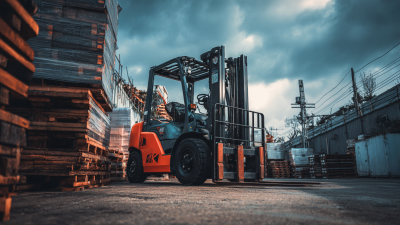
Quality Lift Trucks Bridging China to Global Markets
-
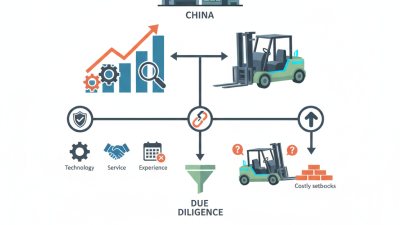
China Top Lift Truck Suppliers for Global Buyers Today?
-

2026 Best Lift Truck Models for Global Buyers to Consider?
-
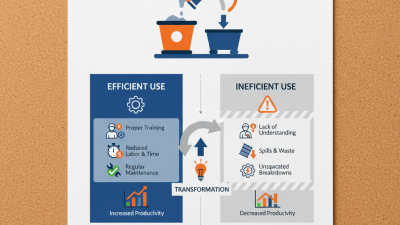
How to Use a Drum Dumper Effectively for Your Business?
-
Discover the Finest Forklift Drum Dumpers from China's Leading Manufacturing Facility
-
Best Barrel Hand Trucks for Easy Moving and Transporting Heavy Loads